
2026 Vision: Best Cultural Immersion Travel Destinations
Cultural immersion travel destinations 2025 and 2026 are drawing more solo explorers than ever before. If you want a quick answer, here are the top picks for your next journey:
- Oaxaca, Mexico – Indigenous crafts, mezcal cooperatives, and Dia de los Muertos
- Sacred Valley, Peru – Andean homestays, weaving traditions, and Pachamanca feasts
- Tbilisi, Georgia – Polyphonic singing, family wine cellars, and Silk Road markets
- Luang Prabang, Laos – Buddhist alms ceremonies, craft villages, and Mekong culture
- Achuar Territory, Ecuador – Community-owned Amazon ecotourism and dawn tea rituals
- Biliran, Philippines – Rural homestays, farming life, and genuine belonging
- Viti Levu, Fiji – Village kava ceremonies, meke dance, and oral traditions
Travel is changing fast. Sightseeing is out. Living it is in.
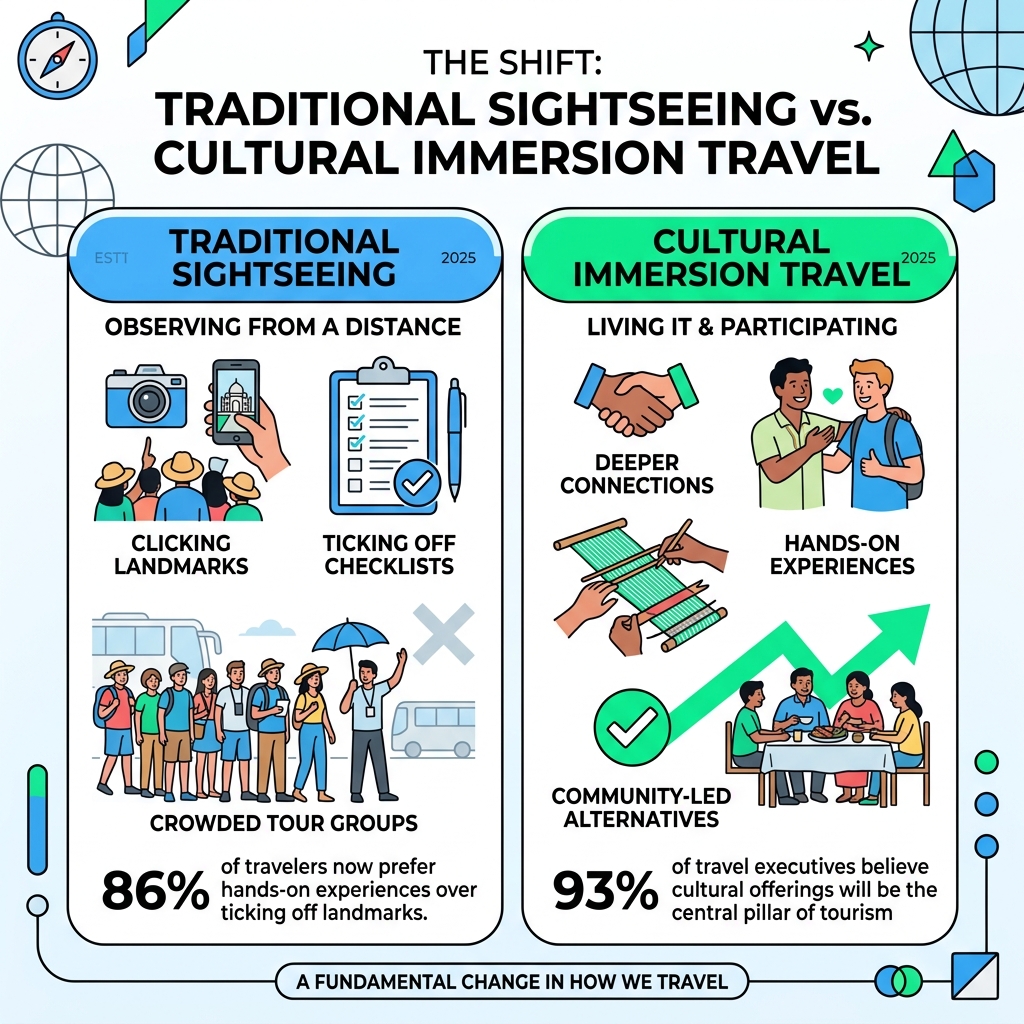
A striking 86% of travelers now prefer hands-on, authentic experiences over ticking off landmarks. And it makes sense. Standing in front of a famous monument is very different from sharing a meal with a local family, learning to weave on a backstrap loom, or waking up at dawn for a ceremonial tea.
For solo travelers aged 25-40, this shift opens up something powerful. You can move at your own pace, go deeper, and form real connections — without the noise of a tour group.
The destinations on this list were chosen because they offer exactly that. Each one puts you inside the culture, not just beside it.
Why Cultural Immersion Travel Destinations 2026 are Redefining Tourism
The landscape of global travel is undergoing a massive transformation. It’s no longer enough to simply “see” a place; we want to feel its pulse. This shift isn’t just a passing fad—it’s a fundamental change in how the industry operates. In fact, 93% of travel executives believe that cultural offerings will be the central pillar of tourism within the next few years.
So, why is this happening now? Much of it stems from a collective exhaustion with “overtourism.” We’ve all seen the photos of overcrowded European squares and congested mountain trails. In response, two-thirds of travelers are actively avoiding famous hotspots in favor of community-led alternatives. We are looking for the “anti-tourist” experience—one that prioritizes local character over souvenir shops.
This move toward cultural immersion travel destinations 2025 and 2026 also brings significant economic benefits to the people who actually live there. By choosing a family-run guesthouse or a village-led workshop, your travel dollars go directly into the hands of local artisans and farmers. This creates a sustainable cycle that preserves traditions rather than diluting them for mass consumption.
For the independent explorer, these destinations offer authentic touchpoints that are often missed in large groups. Whether it’s a neighborhood wine tasting in a hidden cellar or a morning spent at a local market, these moments define the spirit of a place. If you’re planning to head out on your own, check out our guide on cultural travel destinations for solo travelers to see how you can navigate these experiences with confidence.
Top Global Picks for Deep Cultural Connection
To truly immerse ourselves, we have to get our hands dirty—sometimes literally. Deep cultural connection comes from active, empathetic engagement. It’s about moving from being a passive observer to an active participant in a living heritage.

In 2026, the best destinations are those that have preserved their ancient rituals while remaining open to respectful visitors. These spots offer more than a photo op; they offer a lesson in history, art, and humanity. For those who love to explore on foot, George Town and beyond: a solo traveler’s guide to Asian heritage walks provides excellent inspiration for combining physical activity with deep cultural dives.
Oaxaca, Mexico: Indigenous Wisdom and Culinary Heritage in Cultural Immersion Travel Destinations 2026
Oaxaca is often called the “soul of Mexico,” and for good reason. It is a place where indigenous Zapotec and Mixtec traditions aren’t just found in museums—they are part of the daily fabric of life. In 2026, Oaxaca remains a powerhouse for those seeking a deep connection to the land and its people.
One of the most profound experiences here is visiting the weaving cooperatives in towns like Teotitlán del Valle. Here, artisans use natural dyes made from insects (cochineal) and plants to create intricate rugs that tell ancestral stories. Beyond the crafts, the spiritual life of Oaxaca is equally captivating. You might encounter curanderos (traditional healers) who use herbs and ancient rituals for spiritual cleansing.
Of course, we can’t talk about Oaxaca without mentioning the food. Known as the culinary capital of Mexico, the city offers everything from complex moles to street-side tlayudas. For a truly immersive experience, time your visit for Dia de los Muertos (Day of the Dead). While it has become popular, the community-led celebrations in smaller villages remain deeply moving and authentic.
The Sacred Valley, Peru: Andean Philosophy and Ayni
High in the Andes, the Sacred Valley offers a window into a world governed by the philosophy of Ayni, or reciprocity. This isn’t just a nice idea; it’s a way of life where communities work together to survive and thrive in a challenging environment.
When we visit the Sacred Valley in 2026, we recommend moving beyond the typical Machu Picchu day trip. Instead, seek out a Sacred Valley Homestay where you can participate in the daily rhythms of a mountain village. You might help harvest organic potatoes or watch as local women use backstrap looms to create textiles with patterns that have been preserved for centuries.
A highlight of any Andean immersion is the Pachamanca. This is a traditional meal cooked in an earthen oven using hot stones. It’s a communal feast that celebrates the harvest and honors the earth. It’s a sensory explosion of flavors—potatoes, corn, and marinated meats—all infused with the scent of the Andean soil.
Tbilisi, Georgia: Polyphonic Songs and Silk Road Crafts
Georgia is having a major “moment” in 2026, and Tbilisi is its beating heart. This city is a beautiful contradiction of ancient Silk Road history and a buzzing, modern creative scene. It’s a place where hospitality is considered a divine gift, and as a solo traveler, you’ll likely find yourself invited into more than one family wine cellar.
The culture here is best expressed through its music and wine. Georgian polyphonic singing is so unique that it’s protected by UNESCO. Hearing these haunting, multi-layered harmonies in a small church or during a traditional supra (feast) is an experience that stays with you forever.
For the craft-obsessed, Tbilisi’s artisan markets are a treasure trove. You’ll find everything from traditional felt work to modern jewelry inspired by ancient Caucasus designs. If you’re looking for more ideas for your next independent trip, our list of cultural travel destinations for solo travelers 2 has more hidden gems like this.
Luang Prabang, Laos: Buddhist Traditions and Artisan Villages
Luang Prabang is a place that demands you slow down. Nestled at the confluence of the Mekong and Nam Khan rivers, this UNESCO World Heritage town is the spiritual center of Laos. The most famous ritual here is the Tak Bat, or morning alms ceremony, where hundreds of saffron-robed monks walk silently through the streets at dawn to collect food offerings.
Immersion here goes beyond the temples. The surrounding villages are hubs for traditional crafts, from silk weaving to paper making. By participating in a community-led workshop, you help preserve these skills for the next generation. The rhythm of life here is tied to the river and the seasons, offering a sense of peace that is increasingly hard to find in our world.
Emerging Cultural Immersion Travel Destinations 2026: Off-the-Beaten-Path
As the world becomes more connected, the truly adventurous among us are looking further afield. These emerging cultural immersion travel destinations 2026 offer the deepest possible connections because they are often far removed from the standard tourist infrastructure.
These locations focus on indigenous empowerment and regenerative travel—the idea that our visit should actually leave a place better than we found it. For those who find themselves where to go when you’re flying solo and craving culture, these off-the-beaten-path spots provide the ultimate answer.
The Achuar Territory, Ecuador: Amazonian Dream Sharing
Deep in the Ecuadorian Amazon, accessible only by small plane, lies the territory of the Achuar people. This is not a “jungle tour”—it is a journey into a different way of perceiving reality. The Achuar have a profound connection to the spirit world, which they access through their dreams.
A typical day here begins at 3:00 or 4:00 AM with the Wayusa tea ceremony. The community gathers to drink this caffeinated herbal tea and share their dreams from the night before. These dreams are interpreted by elders to guide the community’s actions for the day. For a visitor, participating in this ritual is a humbling lesson in forest cosmology and collective wisdom. You can learn more about this transformative experience through Achuar Cultural Immersion.
Biliran, Philippines: The Art of Belonging in Cultural Immersion Travel Destinations 2026
While most people head to the Philippines for the white-sand beaches of Boracay or Palawan, the island of Biliran offers something much rarer: a sense of belonging. This is a place for “slow travel,” where the goal isn’t to see ten islands in ten days, but to truly understand one.
In Biliran, immersion means living with a host family. You might wake up to the sound of roosters, help with the rice harvest, or go out on a traditional banka boat for a morning of fishing. There are no luxury resorts here; instead, there is the genuine warmth of Filipino hospitality. It’s about sharing meals cooked over wood fires and learning that travel is less about the destination and more about the people you meet along the way.
Viti Levu, Fiji: Oral Traditions and Village Life
Fiji is often marketed as a honeymoon paradise, but the “real” Fiji lives in the traditional villages of the interior and the smaller islands. Fijian culture is built on communal concepts and an oral tradition that stretches back 3,000 years.
A Village Immersion Experience in Fiji allows you to step inside this communal world. You’ll participate in kava ceremonies, which are central to Fijian social and political life. You’ll see the Meke—a traditional dance that tells the history of the tribe—and learn about the youth-led efforts to revitalize cultural knowledge among the younger generation. It’s a world where everyone is “family,” and you are welcomed with open arms.
Practical Strategies for the Independent Cultural Explorer
Traveling for immersion requires a different mindset than traveling for leisure. It takes more preparation, a bit more patience, and a lot more humility. Here is how to plan your 2026 journey:
Comparing Travel Windows
| Destination | Peak Festival Season | Shoulder Season Benefits |
|---|---|---|
| Oaxaca | Oct/Nov (Day of the Dead) | May/June (Lush landscapes, fewer crowds) |
| Peru | June (Inti Raymi) | Sept/Oct (Dry weather, easier to book homestays) |
| Georgia | Sept/Oct (Wine Harvest) | May/June (Wildflowers in the Caucasus) |
| Laos | April (Lao New Year) | Nov/Dec (Cooler temperatures for exploring) |
Safety and Logistics for Solo Travelers
In 2026, technology makes it easier to stay safe while going remote. Download offline maps and use local transport apps where available. In places like Oaxaca or Tbilisi, local buses and shared taxis (marshrutkas) are not only cheap but are also great places to observe local life.
Ethical Exchange and Sustainability
- Language Basics: Learning just ten words in the local language (Zapotec, Georgian, or Achuar) opens doors that English never will. It shows respect.
- Respectful Photography: Always ask before taking a photo of a person or a ritual. In some cultures, like the Achuar, certain ceremonies are sacred and should not be filmed.
- Support Local: Buy your souvenirs directly from the person who made them. This ensures your money supports the craft’s survival.
- Sustainable Packing: Bring a reusable water bottle and biodegradable toiletries, especially in remote areas like the Amazon or Fijian villages where waste management is a challenge.
Frequently Asked Questions about Cultural Immersion Travel
What is the best time of year for cultural festivals in 2026?
The best time depends on the region. For Latin America, October and November are spectacular for Day of the Dead. For Southeast Asia, April is vibrant with New Year water festivals. In Europe, the summer months (June–August) are packed with folk festivals, particularly in the Caucasus and the Balkans.
How can I ensure my visit benefits the local community?
The most effective way is to choose community-owned or community-led experiences. Look for guesthouses run by local families and tours led by indigenous guides. Avoid large international chains and instead spend your money in local markets and family-owned restaurants.
Is cultural immersion travel safe for solo travelers?
Yes, and in many ways, it can be safer than traditional tourism. When you immerse yourself in a community, you are often looked after by your hosts. However, it requires doing your homework. Stick to well-reviewed homestays and always let someone know your itinerary when heading into remote areas.
Conclusion
The year 2026 is the perfect time to reclaim the true spirit of travel. At PrimeFinHub, we believe that the most valuable thing you can bring home from a trip isn’t a souvenir—it’s a perspective. By choosing cultural immersion travel destinations 2026, you aren’t just taking a vacation; you are participating in a global movement toward understanding, respect, and sustainability.
Whether you are sharing a bowl of kava in Fiji, dreaming with the Achuar in the Amazon, or wandering the heritage walks of Asia, these experiences will change the way you see the world. The world is ready for you to belong to it.
