
Greece Has 25 Million Visitors — Here’s How to Dodge Them All
Hidden cultural beaches greece are the kind of places most tourists never find — secluded coves where ancient ruins, local traditions, and crystal-clear water all meet in one spot.
Here are some of the top hidden cultural beaches in Greece worth seeking out:
| Beach | Island/Region | Cultural Highlight |
|---|---|---|
| Artemoni Beach | Sifnos, Cyclades | Abandoned pottery workshops |
| Love Bay | Poros, Saronic Gulf | Sheltered anchorage near historic Poros Town |
| Gidaki Beach | Ithaca, Ionian | Linked to Homeric legends, boat-access only |
| Kamarela Bay | Antikythera | Remote cove, ~40 permanent residents on island |
| Voidokilia Beach | Messinia, Peloponnese | Near Nestor’s Cave and Homeric Navarino Bay |
| Atheras Beach | Kefalonia, Ionian | Historic Agios Spyridon Church nearby |
| Vlychada Beach | Santorini, Cyclades | Volcanic landscape, Panagia Theoskepasti Chapel |
Nearly 25 million travelers visited Greece in 2025. Most of them piled onto the same ferries to Mykonos and Santorini.
That’s actually good news for you.
Because while the crowds queue for the postcard shots, an entirely different Greece sits quietly waiting — one where a small beach might back up against a 2,300-year-old fortress, or where the only other visitors are a handful of locals who’ve been coming for decades.
These aren’t just pretty beaches. They’re places with stories. A cove with abandoned pottery kilns. A bay that Homer may have written about. An island with more churches than days in the year.
That’s the Greece this guide is about.
Defining the Hidden Cultural Beach Experience
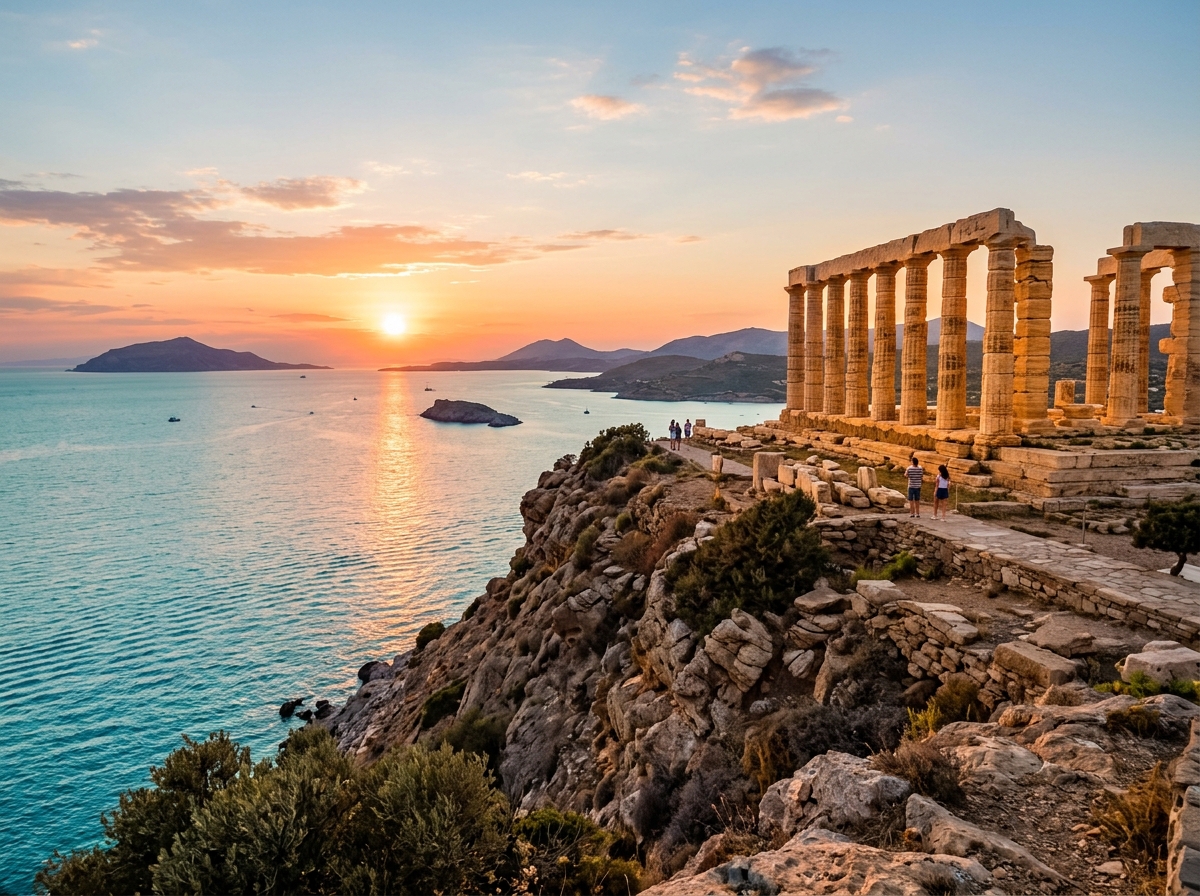
What exactly makes a beach “cultural”? In Greece, the landscape is rarely just sand and salt. We define a hidden cultural beach in Greece as a coastal spot where the natural beauty is inseparable from the human history surrounding it. It is an experience that appeals to the soul as much as the eyes.
For us at PrimeFinHub, these destinations are the holy grail of independent travel. They offer a layer of spiritual heritage—perhaps a tiny white-washed chapel perched on a cliffside or a crumbling Venetian watchtower guarding the bay. When you visit these shores, you aren’t just sunbathing; you are immersing yourself in local traditions that have survived for millennia.
Whether it is the architectural landmarks of an 18th-century dovecote or the remnants of an ancient harbor visible beneath the waves, culture enhances the beach experience by providing context. It turns a simple swim into a journey through time. If you are looking for more inspiration, check out our guide on cultural travel destinations for solo travelers to see how history and relaxation can blend perfectly.
Cycladic and Saronic Treasures: Art and Tradition
The Cyclades and Saronic Gulf are often dismissed as “too touristy,” but that is a rookie mistake. Beyond the main ports lies a world of marble, clay, and faith. Take Tinos, for example. While its neighbor Mykonos dances, Tinos carves. The island is home to over 40 traditional villages and a legendary marble sculpture school in Pyrgos.
On the western coastline of Sifnos, you’ll find Artimoni beach | Sifnos. This isn’t your typical resort beach. It is a rugged, isolated cove that holds the ghost of the island’s famous ceramics heritage. Here, abandoned pottery workshops stand as silent witnesses to a time when Sifnos was the pottery capital of the Aegean.
In the Saronic Gulf, the lush island of Poros offers Love Bay and Russian Bay. Love Bay is a tiny, pine-fringed paradise that feels worlds away from the town, while Russian Bay holds the stone ruins of a 19th-century Russian naval base. These spots are perfect solo travel beach destinations for independent explorers who want a mix of greenery and history.
Then there is Ios. Long known as a party hub, it is currently undergoing a cultural rebirth. Did you know Ios boasts more than 365 churches—one for every day of the year? The Panagia Gremiotissa, sitting high above the harbor, offers a spiritual vantage point that makes the turquoise waters below look even more divine.
The Artistic Heritage of Hidden Cultural Beaches in Greece
The “culture” in these beaches is often tactile. At Artemoni, you can practically feel the clay dust of the past. In Tinos, the village of Volax looks like a lunar landscape covered in massive granite boulders, some of which feature handwritten poetry on the walls of local homes.
For those craving a modern artistic twist, the Gaϊtis Simossi Museum on Ios showcases contemporary Greek art in a stunning architectural setting. These sites prove that hidden cultural beaches in Greece are about more than just the shore—they are about the artisans, monks, and sailors who shaped the land. Exploring these niches is why we love finding hidden gems for solo travelers who appreciate the finer details of Greek life.
Ionian and Dodecanese Escapes: History in the Turquoise
Moving west to the Ionian Sea, the vibe shifts from rugged stone to lush green. The water here is famous for its incredible visibility, making it a dream for snorkelers.
In Kefalonia, Atheras Beach Kefalonia is a sheltered, W-shaped bay with warm, shallow water. Just a short walk from the sand is the historic blue-hued Agios Spyridon Church. Meanwhile, on Ithaca, Gidaki Beach remains one of the most beautiful in the country. Accessible only by boat or a strenuous hike, it is the kind of place where you can sit and imagine the legends of Odysseus.
If you want to truly get off the grid, look toward Kamarela Bay, Antikythera. This is one of Greece’s last untouched frontiers. The island has only about 40 permanent residents. Kamarela itself is a cinematic cove featuring a massive natural stone arch. There are no sunbeds, no tavernas—just you and the “salt in the air,” as the locals say.
For those where to go when you’re flying solo and craving culture, the Dodecanese offer Symi and Tilos. Symi’s harbor is a neoclassical masterpiece, while Tilos offers panoramic hiking trails where you might only pass five or six people all day. Don’t miss Nisyros, where the Paliokastro fortress contains 2,300-year-old inscriptions mentioned in The Iliad.
Mainland Marvels: Legends of the Peloponnese and Euboea
You don’t always need a ferry to find hidden cultural beaches in Greece. The mainland, particularly the Peloponnese, is a treasure trove of Homeric history.
Untouched Beauty: Voidokilia Beach is perhaps the most famous “hidden” spot in Messinia. Its perfect semi-circle shape is iconic, but its history is even deeper. Perched on the cliffs above is Nestor’s Cave and the ruins of Old Pylos (Paleokastro). Legend has it that this is where King Nestor welcomed Telemachus in the Odyssey.
Further north in Euboea, Kalami Beach offers absolute tranquility. Reaching it requires a 4×4 vehicle or a dedicated hike from Oktonia village, but the reward is a beach of colorful pebbles and a massive diving rock.
And we can’t forget the “Maldives of Greece”—Kavourotrypes in Sithonia. These tiny bays hidden in the pines feature white limestone rocks sculpted by the wind. Look closely at the rocks, and you might find the famous mermaid carving, a bohemian relic left by a local artist years ago. It’s a perfect addition to the list of tropical destinations for solo travelers who want an exotic feel without leaving Europe.
Planning Your Journey to Hidden Cultural Beaches in Greece
Visiting these beaches requires a bit more planning than a trip to a resort. Many are best accessed by sea. A yacht charter from Athens or Corfu allows you to reach spots like Gidaki or Love Bay with ease, providing a “floating hotel” experience that lets you skip the crowds entirely.
Timing is also everything. While July and August are the busiest, September is often the best time to visit. The sea is at its warmest, the “Meltemi” winds have died down, and the 25 million tourists have mostly headed home. This is also the season for many local religious festivals (panigiria), where you can experience authentic music and food after a day at the beach.
Navigating the Logistics of Hidden Cultural Beaches in Greece
To help you plan, we’ve compiled a quick reference for some of our favorite spots:
| Beach | Best Access Method | Difficulty Level |
|---|---|---|
| Kalami (Euboea) | 4×4 Vehicle + 300m Hike | Hard |
| Kamarela (Antikythera) | Private Boat or 30m Hike | Moderate |
| Voidokilia (Messinia) | Car (Parking behind beach) | Easy |
| Artemoni (Sifnos) | Boat or 30m Hike | Moderate |
| Gidaki (Ithaca) | Water Taxi or Forest Trail | Moderate |
When traveling to these unorganized shores, remember the essentials: plenty of water, snacks, sun protection, and sturdy shoes. Many of these locations have zero facilities. This is part of their charm, but it requires a self-sufficient mindset. For more tips on preparing for independent trips, our second guide on cultural travel destinations for solo travelers 2 covers the logistics of solo exploration in depth.
Frequently Asked Questions about Hidden Cultural Beaches in Greece
What is the best way to access Greece’s most secluded cultural beaches?
The most effective way is by sea. Many of the best hidden cultural beaches in Greece, such as Gidaki or the coves of Antikythera, have difficult land access. Renting a small motorboat or joining a sailing charter allows you to reach these spots comfortably. For mainland beaches like Kalami, a 4×4 vehicle is highly recommended.
Which Greek island has the most churches and cultural sites near its shores?
Ios is a top contender with its 365+ churches, many of which are visible from the coastline. Tinos is another excellent choice, featuring over 40 traditional villages and unique architectural dovecotes scattered near its hiking paths and beaches.
When is the best time to visit hidden beaches to avoid the 25 million annual tourists?
We recommend the shoulder seasons: May to June or September to October. September is particularly ideal because the water remains very warm, but the peak summer crowds have vanished, making it much easier to find solitude at even the most popular “hidden” spots.
Conclusion
At PrimeFinHub, we believe that travel should be more than just a checklist of famous landmarks. It should be an exploration of the quiet corners where history still feels alive. By seeking out hidden cultural beaches in Greece, you are choosing a path of independent exploration and deep cultural immersion.
Whether you are hiking to a remote pottery workshop in Sifnos or anchoring your boat in a bay mentioned by Homer, these experiences offer a connection to the past that no crowded resort can match. So pack your bags, grab your snorkel, and get ready to discover the authentic side of the Mediterranean.
Discover more immersive cultural destinations and start planning your next great independent adventure with us.
