
Why Cultural Weaving Villages Solo Belong on Every Artisan Traveler’s Bucket List
Cultural weaving villages Solo offer some of the most immersive, hands-on textile experiences available to independent travelers anywhere in Southeast Asia. If you want a quick overview of what to expect, here it is:
Top cultural weaving villages in Solo (Surakarta):
| Village | Specialty | Visitor Highlight |
|---|---|---|
| Kampung Kauman | Hand-drawn batik, jlamprang motifs | Workshops, Batik Heritage Museum, official tourism village since 2006 |
| Kampoeng Batik Laweyan | Traditional and stamped batik | 80+ active SMEs, historic Javanese-European architecture, batik classes |
What you can do there:
- Take a hands-on batik-making class (walk-in or pre-booked)
- Watch master artisans work with wax, dye, and traditional tools
- Shop directly from local makers at village markets and boutiques
- Explore museums and galleries showcasing centuries of textile heritage
Solo, also known as Surakarta, sits at the center of Javanese cultural life in Central Java, Indonesia. It has been a hub for batik production since at least the 15th century, with roots stretching back to the royal courts of the Mataram Sultanate.
Batik itself is no ordinary craft. UNESCO officially recognized Indonesian batik as an Intangible Cultural Heritage of Humanity in 2009. In Solo’s weaving villages, that heritage is still alive and practiced daily — not preserved behind glass, but created right in front of you.
For solo travelers, this matters. You are not watching a performance staged for tourists. You are stepping into working communities where artisans have been passing down their skills for generations.
The name “Laweyan” itself comes from the Javanese word for thread — a fitting reminder that this place has been woven into Solo’s identity for centuries.
Both Kauman and Laweyan have faced real challenges — from industrialization in the 1970s to competition from mass-produced printed textiles. The fact that they not only survived but are now thriving again, with over 80 active small businesses in Laweyan alone, makes visiting them feel meaningful. Your presence and purchases directly support that recovery.
Whether you have a single afternoon or a full week, Solo’s artisan villages are navigable, welcoming, and genuinely rewarding for independent travelers.
The Historical Heart of Cultural Weaving Villages Solo
To understand the cultural weaving villages solo travelers love today, we have to look back over 500 years. The story begins with the Mataram Sultanate and the Pajang Kingdom in the 16th century. During this era, batik was more than just a fabric; it was a symbol of status, spirituality, and royal connection.
The craftsmanship we see today was heavily influenced by figures like Kyai Ageng Henis, a descendant of Brawijaya V, who is credited with introducing the artistry of batik to the Laweyan region around 1546. For centuries, the production of these textiles was deeply intertwined with the royal courts of the Kasunanan Palace.
We find that Kampung Kauman: the charming, old batik production center in Solo remains the most authentic link to this royal past. Historically, this village served as the residence for courtiers who maintained the batik-making traditions for the palace. This royal patronage ensured that the techniques remained refined and the motifs carried deep philosophical meanings.
As we curate cultural travel destinations for solo travelers, we look for places where history is a living, breathing thing. Solo fits this perfectly. The transition of these villages from exclusive royal suppliers to public tourism hubs has allowed the craft to survive modern economic shifts.
Kauman: The Royal Courtier’s Legacy
Kampung Kauman is often referred to as the “Batik Diplomacy” center. Because it was the home of the Kasunanan Palace courtiers, the batik produced here originally catered to the aristocracy. If you walk through its narrow alleys today, you can still feel that sense of refined heritage.
One of the most fascinating aspects of Kauman is its invention of specific styles. It is the birthplace of jlamprang batik, which features intricate Arabic and Indian-influenced geometric motifs, and encim batik, which shows a clear Chinese cultural influence. This blend of styles reflects Solo’s history as a crossroads of trade and culture.
Since being officially designated as a batik tourism village in 2006, Kauman has opened its doors to the world. For us as solo explorers, this means we can walk into workshops that have been active since the early 1900s and see the same hand-dyeing and wax-resist techniques that were used to dress sultans.
Laweyan: The Merchant’s Renaissance
While Kauman was the village of courtiers, Laweyan was the village of the “Batik Barons.” This was the merchant heart of Solo. In the early 1900s, Laweyan entered a golden era, largely thanks to the introduction of the cap (stamping) technique by Samanhudi in 1911. This revolutionized the industry, making batik more accessible and allowing Laweyan to become a massive economic power.
However, the 1970s brought a dark period. The rise of mass-produced printed textiles (which are not true batik) nearly decimated the traditional artisans. By the early 2000s, the number of producers in Laweyan had dwindled to just 16.
The turnaround is nothing short of a miracle. In 2002, community leaders formed the Forum Pengembangan Kampoeng Batik Laweyan (FPKBL). They rebranded the village, focused on heritage tourism, and encouraged younger generations to return to the craft. Today, there are more than 80 active small and medium industries (SMEs) in the village. This resilience is a key part of the Solo travel and culture experience—witnessing a community that refused to let its history die.
Immersive Experiences for Solo Weaving Enthusiasts
The beauty of visiting cultural weaving villages solo is the freedom to linger. You aren’t being rushed by a tour bus. You can sit with an artisan for an hour, watching the steady hand of a woman applying wax with a canting tool.
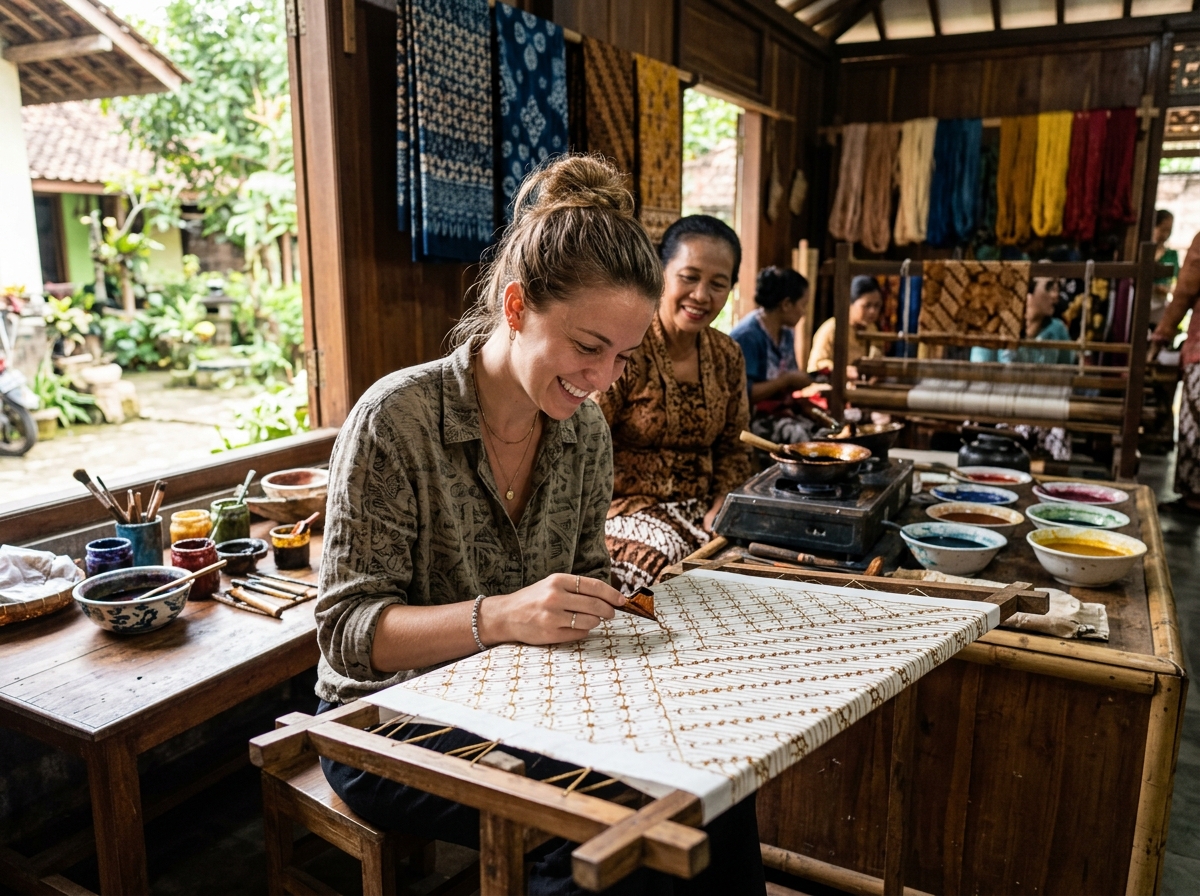
In both villages, the “living museum” concept is real. Many workshops are part of the artisans’ homes. We recommend looking for signs that say “Workshop” or “Pelatihan Batik.” These spots often allow you to try your hand at the craft. If you’re wondering where to go for solo culture, these interactive exhibits and hands-on classes provide a level of connection that you just can’t get from a standard sightseeing tour.
Mastering Techniques in Cultural Weaving Villages Solo
If you decide to take a workshop, you’ll be introduced to the three pillars of Javanese batik:
- The Canting: A small copper spout used to “write” with hot wax. This produces Batik Tulis (hand-drawn batik). It requires immense patience; a single piece of cloth can take months to complete.
- The Cap: A copper stamp used to apply wax patterns more quickly. While faster than the canting, it still requires precision to ensure the patterns align perfectly.
- The Dyeing: Traditional Solo batik often uses natural pigments. You might see artisans using indigo leaves for blues or the bark of the soga tree for the iconic deep browns and yellows known as “Sogan.”
The process is rhythmic and meditative. Watching the wax-resist dyeing—where the wax is applied, the cloth is dipped in dye, and then the wax is boiled off—is a lesson in Javanese philosophy: nothing beautiful is created without time and heat.
Beyond the Loom: Museums and Markets
While the workshops are the heart of the experience, Solo offers several “must-see” stops for any textile enthusiast:
- Batik Danar Hadi Museum: This is arguably one of the finest textile museums in the world. It houses a massive private collection of batik, ranging from royal heirlooms to pieces influenced by the Dutch colonial era.
- Pasar Klewer: This is the largest textile market in Solo. It’s bustling, loud, and a bit chaotic—perfect for a solo traveler who wants to practice their bargaining skills. You can find everything from cheap souvenirs to high-end silk batik.
- Batik Heritage Museum: Located within the villages, these smaller museums focus on the specific history of the local families and their tools.
Walking between these sites allows you to appreciate the Javanese-European architecture of Laweyan. The high walls and grand gates were designed to protect the “Batik Barons'” wealth, and today they make for some of the best Asian heritage walks in Indonesia.
Symbolism and Artistry in Solo’s Textiles
Every line and dot in a Solo batik tells a story. Unlike the vibrant, multi-colored batik from coastal regions like Pekalongan, Solo batik is famous for its “Sogan” color palette—earthy browns, creams, and deep indigos. These colors represent the earth and the humility valued in Javanese culture.
To help you distinguish between the types of textiles you’ll encounter in cultural weaving villages solo, we’ve put together this comparison:
| Feature | Batik Tulis (Hand-drawn) | Batik Cap (Stamped) |
|---|---|---|
| Tool Used | Canting (spout tool) | Copper Stamp (Cap) |
| Production Time | 1 to 6 months | 2 to 7 days |
| Pattern Symmetry | Slight irregularities (human touch) | Highly symmetrical and repetitive |
| Price Point | High (Investment piece) | Moderate (Affordable) |
| Scent | Strong smell of natural beeswax | Often has a fainter wax scent |
Some of the most iconic motifs you will see include:
- Parang: A diagonal “S” pattern that symbolizes power and resilience. Historically, large Parang motifs were reserved exclusively for the Sultan and his family.
- Sidomukti: Often worn at weddings, this pattern symbolizes a life of prosperity and happiness.
- Kawung: Four circles intersecting, representing the four directions of the compass and a heart that is pure and centered.
These aren’t just decorative; they are a form of visual language. When you buy a piece of batik in Solo, you aren’t just buying fabric; you are carrying home a piece of Javanese philosophy.
Navigating Solo’s Artisan Hubs Independently
Solo is one of the most solo-traveler-friendly cities in Indonesia. It’s smaller and more manageable than Yogyakarta, and the people are famously soft-spoken and polite.
To get around, we highly recommend the becak (cycle rickshaw). It’s the perfect speed for sightseeing. You can hire a becak driver for a few hours to take you through the winding alleys of Laweyan and Kauman. Most drivers know the best workshops and are happy to wait while you take a class.
Safety and Etiquette Tips:
- Dress Modestly: Solo is a traditional city. When visiting villages or the palace, ensure your shoulders and knees are covered.
- Best Time to Visit: Aim for the morning (9:00 AM to 12:00 PM). This is when the light is best for photography and most artisans are actively working in their workshops.
- Ask Before You Snap: Most artisans are happy to be photographed, but it’s polite to ask “Boleh foto?” (May I take a photo?) first.
- Bargaining: In markets like Pasar Klewer, bargaining is expected. However, in the village boutiques and workshops, prices are often fixed to reflect the fair wages paid to the artisans.
Supporting the Local Artisan Economy
When you visit cultural weaving villages solo, your economic impact is direct. In villages like Chau Giang in Vietnam or the Ulos villages of North Sumatra, weaving is the primary livelihood for over 80% of households. Solo is no different.
By purchasing directly from the 80+ SMEs in Laweyan or the family workshops in Kauman, you are helping to ensure that this craft remains a viable career for the next generation. We’ve seen that when tourists show interest in traditional methods, younger Javanese people are more likely to see the value in learning the craft from their elders. This generational continuity is the only way to protect the heritage against the tide of cheap, mass-produced imports.
Frequently Asked Questions about Cultural Weaving Villages Solo
What is the best time for a solo traveler to visit these villages?
We recommend visiting during the dry season (May to September) for the easiest navigation. Daily, the best time is between 9:00 AM and 2:00 PM. This is when the workshops are most active. Many artisans take a break in the late afternoon, and some shops in Kauman may close early on Fridays for prayers. If you can, time your visit with the Solo Batik Carnival (usually held in July), where the streets come alive with incredible textile-based costumes.
How do I participate in a batik workshop as a solo visitor?
Most workshops in Laweyan and Kauman are very welcoming to walk-ins. You can simply walk up to a sign that says “Kursus Batik” or “Batik Class.” A basic session usually lasts 2-3 hours and costs between 50,000 to 150,000 IDR ($3 – $10 USD), which includes all materials and your finished piece of cloth. If you want a more intensive, multi-day course, it’s best to contact the Forum Pengembangan Kampoeng Batik Laweyan in advance to arrange a masterclass.
Are these weaving villages safe for independent female travelers?
Absolutely. Solo is widely considered one of the safest cities in Indonesia. The weaving villages are tight-knit communities where people are generally very helpful. As a solo female traveler, you might get some curious questions about why you are traveling alone, but it is almost always rooted in friendly interest. Stick to the well-lit main paths if you are exploring in the evening, and use reputable ride-hailing apps like Gojek or Grab if you need to return to your hotel after dark.
Conclusion: Preserving Heritage Through Solo Exploration
At PrimeFinHub, we believe that travel should be more than just checking boxes; it should be about meaningful connection. Cultural weaving villages solo offer exactly that—a chance to slow down, use your hands, and learn from masters of a centuries-old craft.
The challenges of modern industrialization and the lure of fast fashion are real threats to these communities. However, the resilience of Solo’s artisans, from the revival of Laweyan to the royal preservation in Kauman, shows that traditional heritage can thrive in the modern world.
By choosing to visit these villages, you aren’t just a spectator. You are a participant in the survival of a UNESCO-recognized treasure. Whether you’re holding a canting for the first time or simply admiring the historic architecture, you are helping to weave the future of Javanese culture.
Are you ready to start your journey? We invite you to plan your solo cultural journey and discover the intricate beauty of Solo for yourself. There is a world of thread and wax waiting for you.
