
Top Global Destinations for Ethnic Clothing Markets Solo
When we travel independently, we aren’t just looking for souvenirs; we are looking for stories. The world’s most iconic ethnic clothing markets solo travelers frequent are those that serve as cultural anchors. From the high-altitude plazas of the Andes to the bustling streets of East London and the curated pop-ups of Tokyo, these destinations offer a masterclass in textile history.
For those seeking cultural travel destinations for solo travelers, markets provide a safe, high-energy environment where you can blend in with the locals. In Cusco, the air is thin but the colors are dense, filled with the smell of alpaca wool and eucalyptus. In London, the markets are a timeline of the city’s immigrant heart, while in Japan, specialized curators bring the heat and vibrancy of West African artistry to the minimalist streets of Tokyo.
Finding Authentic Pieces in Ethnic Clothing Markets Solo
How do you distinguish a mass-produced “tourist poncho” from a piece of living heritage? When exploring ethnic clothing markets solo, the secret lies in the details of handmade quality. Authentic pieces often feature slight irregularities—a sign of the human hand.
In London’s Spitalfields area, vendors like Uroco | Market Traders | Spitalfields Market E1 showcase how traditional aesthetics can be maintained even in a modern metropolitan setting. To find the “real deal,” we recommend looking for artisans who can explain the symbolism in their patterns. Whether it’s a specific geometric weave from a Peruvian village or the intricate indigo resist-dyeing of Nigerian Adire, the vendor’s knowledge is your best guarantee of authenticity.
Cultural Heritage and Textile History
Every thread tells a story of survival and identity. In Cusco, the textiles are a direct link to Inca traditions, where patterns once denoted social status and regional origin. Similarly, London’s markets are a map of the city’s soul. Petticoat Lane, for instance, reflects the waves of Jewish and Bengali immigrants who built the city’s garment industry from the ground up.
For a deeper dive into how these markets fit into the broader travel landscape, check out our George Town and beyond: A solo traveler’s guide to Asian heritage walks. Much like the heritage walks in Asia, walking through an ethnic textile market is a form of “slow travel” that respects the pace of the artisans.
Navigating London’s Historic Textile Hubs

London is a patchwork quilt of global fashion. If you are hunting for ethnic clothing markets solo, the East End is your primary destination. This area has been the center of the textile trade for centuries, evolving from a hub for French Huguenot silk weavers to a modern multicultural fashion powerhouse.
Petticoat Lane and Portobello Green
Petticoat Lane (consisting of Middlesex Street and Wentworth Street) is a legendary name in the fashion world. It’s not just one of the oldest markets; it’s a survivor. Today, it hosts over 200 tenants on Middlesex Street and 138 on Wentworth Street. While it sells general goods, its heart remains in clothing. On Sundays, the market explodes in size, with over a thousand stalls offering everything from high-fashion leather to traditional African fabrics and “two quid” dresses.
Across town, Portobello Green Market offers a different, more bohemian vibe. While the main Portobello Road is famous for antiques, the “Green” section (under the Westway canopy) is the place for vintage and world fashion. Open Friday through Sunday, it’s a treasure trove for solo shoppers looking for eclectic jewelry, global textiles, and one-off designer pieces.
Immigrant Histories and Modern Trends
The history of Petticoat Lane Market is a fascinating tale of resilience. Its name comes from the 17th-century sale of petticoats, and a local fable suggested that “they would steal your petticoat at one end of the market and sell it back to you at the other!”
The market has been shaped by:
- Huguenots: Bringing silk weaving expertise in the 1600s.
- Jewish Traders: Who fought for the right to trade on Sundays, eventually leading to formal recognition by an Act of Parliament in 1936.
- African and Asian Communities: Who today provide the vibrant wax prints and silks that define the market’s modern aesthetic.
Today, you can find businesses like Hilton Textiles standing alongside modern pop-up events, making it a perfect spot for solo explorers to soak up Petticoat Lane’s historic atmosphere.
Immersive Andean Weaving Traditions in Cusco
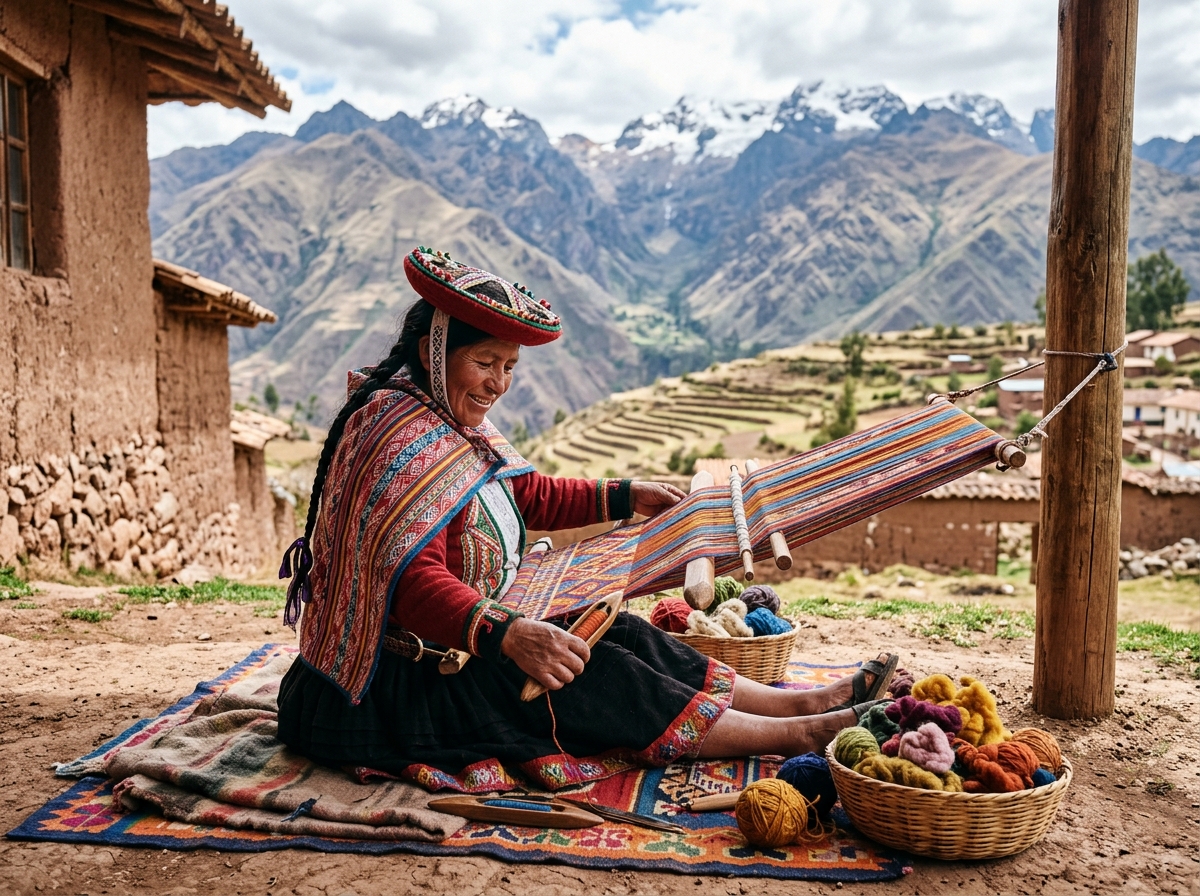
Cusco is the beating heart of Andean culture. For the solo traveler, the markets here are more than just retail spaces—they are community centers where the ancient and the modern collide.
San Pedro and Chinchero Markets
The Central San Pedro Market is the most emblematic spot in the city. Designed by Gustave Eiffel (yes, that Eiffel), it features endless aisles of textiles, handmade crafts, and alpaca clothing. It is the sensory epicenter of Cusco, where you can buy a hand-knit chullo (ear-flap hat) while sipping a fresh juice made from fruits you’ve never seen before.
However, if you want to see where the magic happens, we suggest taking a 45-minute “combi” (local bus) ride to Chinchero Market. Chinchero is famous for its “living museum” feel. Here, rural Andean communities specialize in handmade textiles like ponchos and blankets. You can watch women use natural dyes—like cochineal insects for red and volcanic minerals for green—to color the wool before weaving it on backstrap looms.
Sensory Experiences in the Sacred Valley
Visiting these markets is a full-body experience. You’ll hear the rhythmic clicking of knitting needles, smell the earthy scent of raw wool, and see a kaleidoscope of colors that seem almost too bright to be natural.
| Feature | San Pedro Market (City) | Chinchero Market (Rural) |
|---|---|---|
| Atmosphere | Bustling, urban, social hub | Traditional, quiet, community-focused |
| Best For | Variety, food, quick souvenirs | Authentic weaving, natural dyes, blankets |
| Transport | Walking distance from Plaza de Armas | 45 min by taxi or combi |
| Bargaining | Expected and | Gentle, respectful, and slower |
For more tips on navigating these high-altitude gems, see our guide on cultural travel destinations for solo travelers 2.
Discovering West African Artistry via SOLOLA Pop-ups
Not all great ethnic clothing markets solo travelers love are permanent fixtures. Some of the most exciting finds come from curated pop-ups and seasonal exhibitions. A prime example is SOLOLA, a specialized shop that brings West African arts and crafts to the Japanese market.
Indigo Adire and African Waxprints
SOLOLA focuses on authentic textiles that are becoming rare even in their home countries. One of their specialties is Adire-Eleko, a traditional indigo-dyed fabric from the Yoruba tribe in Nigeria. This involves a labor-intensive resist-dyeing process using starch paste.
They also showcase:
- Bogolan (Mud Cloth): Hand-spun cotton dyed with fermented mud from Mali and Burkina Faso.
- African Waxprints: Known for their vivid colors and bold, symbolic patterns.
- Ghanaian Baskets: Intricately woven and perfect for the eco-conscious solo traveler.
Fusion Fashion and Seasonal Exhibitions
What makes these events unique is the fusion of cultures. SOLOLA often hosts pop-ups in Tokyo and Kamakura where they transform African waxprints into traditional Japanese summer wear, such as yukata and jinbei.
These events are perfect for solo travelers because they often include talk events and workshops. For instance, recent exhibits in Asagaya and Yanaka allowed visitors to meet the curators and learn the stories of the individual artisans in Africa. Keep an eye on the SOLOLA News and Events page for upcoming 2025 dates in locations like Asakusa and Kawagoe.
Essential Tips for Shopping Ethnic Clothing Markets Solo

Shopping in ethnic clothing markets solo requires a blend of confidence and cultural sensitivity. Without a group to lean on, you are responsible for your own safety and your own deals.
Safety and Bargaining in Ethnic Clothing Markets Solo
- The Art of the Haggle: Bargaining is a social interaction, not a battle. In places like Cusco or Petticoat Lane, start by asking the price and then offer a slightly lower amount with a smile. If the vendor says no, it’s okay to walk away—often, they’ll call you back with a better offer.
- Money Matters: Always carry small bills and coins. Large notes are hard to break in markets, and using them can mark you as an “unprepared tourist.” Keep your cash in a secure, hidden place, like a money belt or an internal jacket pocket.
- Scam Avoidance: Be wary of “too good to be true” deals. If someone offers you “100% baby alpaca” for five dollars, it’s likely synthetic. Real handmade textiles have a weight and a smell (natural wool smells slightly like hair when wet) that synthetics don’t.
- Solo Safety: Markets can be crowded. Keep your bag in front of you and avoid looking at your phone while walking. For more safety advice, check out where to go when you’re flying solo and craving culture.
Best Times to Visit and Transport Access
- London: To reach Petticoat Lane, take the Tube to Liverpool Street, Aldgate, or Aldgate East. Sunday morning is the peak time for the full market experience.
- Cusco: Most markets are walkable from the center. For rural markets like Chinchero or Pisac, agree on a taxi fare upfront or use the local combis for a few soles.
- Tokyo Pop-ups: Use the “In The City” app or check local gallery listings. Most are near major stations like Asakusa or Kamakura and are best visited on weekday afternoons to avoid the weekend rush.
Frequently Asked Questions about Ethnic Clothing Markets Solo
What is the best time to visit these markets to avoid crowds?
Generally, the “Golden Hour” for markets is right at opening (usually 8:00 AM or 9:00 AM). You get the first pick of the items, and the vendors are often more relaxed. In London’s Petticoat Lane, Sundays are the busiest, so if you want a quieter experience, try the smaller weekday markets on Wentworth Street.
How do I ensure the clothing I buy is authentically handmade?
Look for “imperfections.” Machine-made items are perfectly symmetrical and identical. Handwoven textiles will have slight variations in the weave or dye. Also, talk to the vendor! Artisans who make their own goods are usually proud to explain the process, the materials used, and the meaning of the patterns.
Is it safe to carry large amounts of cash in these markets?
We don’t recommend carrying large amounts of cash. Instead, carry only what you intend to spend for the day. Many modern markets in London and Japan now accept contactless payments, but in the rural markets of Peru or West African pop-ups, cash is still king. Split your money between a wallet and a hidden pouch.
Conclusion
At PrimeFinHub, we believe that travel is about more than just seeing new places; it’s about touching the fabric of a different life—quite literally. Exploring ethnic clothing markets solo allows you to move at your own pace, engage deeply with artisans, and bring home a piece of cultural heritage that supports local communities.
Whether you’re navigating the historic lanes of London, the high-altitude markets of the Andes, or the vibrant African textile pop-ups in Japan, you are participating in an ancient tradition of trade and storytelling. By shopping mindfully and respectfully, you ensure these traditions continue for generations to come.
Ready to start your journey? Plan your next solo cultural adventure with our expert guides and curated destinations. Safe travels and happy hunting!
