
Why Traditional Villages Solo Trips Are the Most Rewarding Way to Travel Alone
Traditional villages solo trips are one of the best ways to experience authentic culture, slow down, and connect with local life on your own terms.
Here are the top traditional villages worth visiting solo:
| Village | Country | Best For | Accessibility |
|---|---|---|---|
| Shirakawa-go | Japan | UNESCO farmhouses, winter scenery | Bus from Takayama (~1 hr, JPY 2,600) |
| Ainokura | Japan | Remote quiet, washi workshops | Bus from Shirakawa-go (~45 min) |
| Theth | Albania | Alpine hiking, guesthouse culture | Furgon from Shkodër (~2.5-3 hrs) |
| Wae Rebo | Indonesia | Ancestral cone houses, jungle trek | Tour from Labuan Bajo + 2-hr hike |
Most solo travelers focus on cities. But villages offer something cities simply can’t: real daily life, unhurried rhythms, and locals who actually have time to talk to you.
The gap in mainstream solo travel content is clear. Nearly every “best places to travel alone” list points to Barcelona, Tokyo, or New York. Traditional villages barely get a mention — yet they’re often safer, more memorable, and far more transformative.
This guide changes that.
Whether you’re drawn to snow-covered farmhouses in Japan, stone guesthouses in the Albanian Alps, or ancient cone-shaped homes in Indonesia, there’s a village waiting for you — and you don’t need a group to get there.
Why Traditional Villages Solo Trips are Perfect for Women
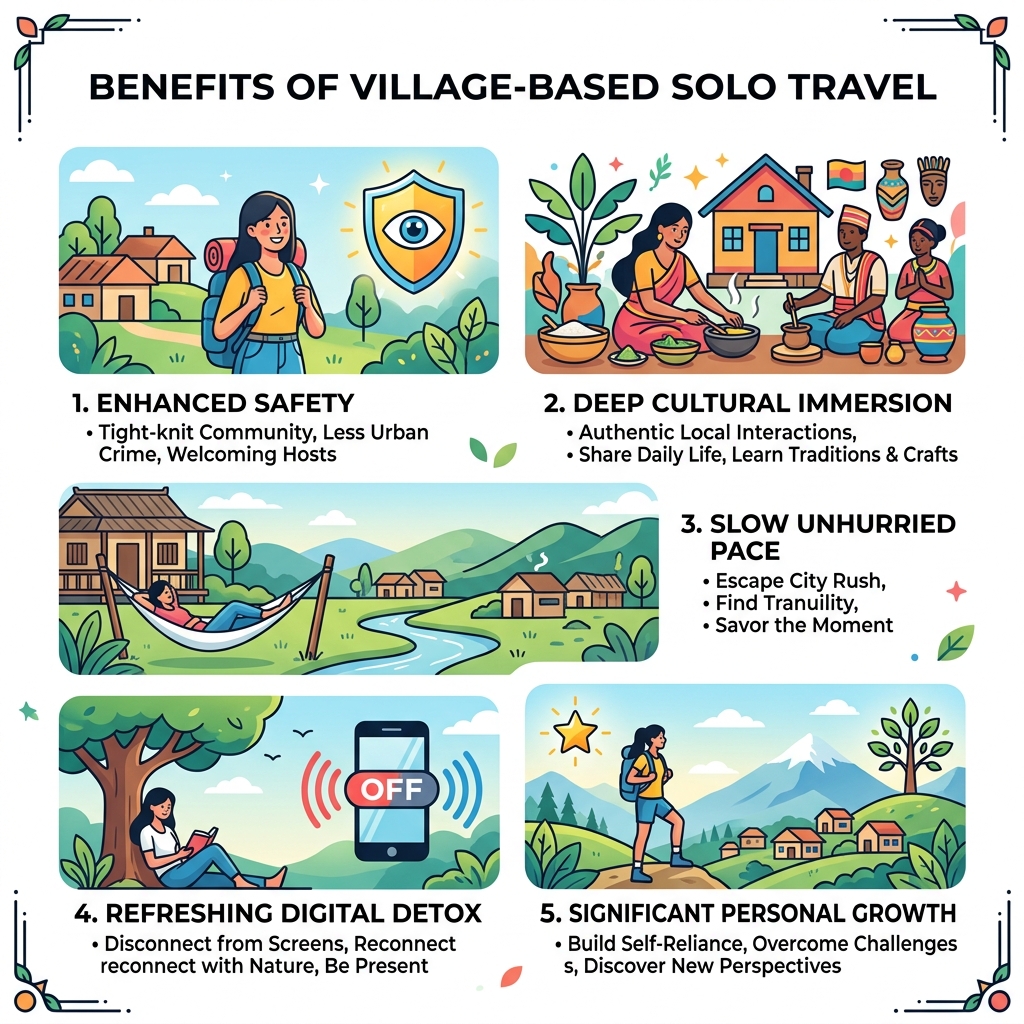
When we think about solo travel, the initial excitement is often tinged with a bit of “safety stress.” This is exactly why we believe traditional villages solo trips are the ultimate hack for the independent woman nomad. Unlike bustling metropolises where you might feel like just another face in the crowd, traditional villages operate on a foundation of community.
In many of these remote areas, the crime rate is negligible. Residents often know one another, and as a solo visitor, you are a guest of the entire community. This creates a unique safety net that is hard to find in a city. Beyond safety, these destinations serve as incredible hidden-gems-for-solo-travelers/ because they force us to slow down.
The “slow pace” of village life is a natural antidote to burnout. There are no subways to rush for or crowded tourist traps to navigate. Instead, your day might consist of watching a local artisan at work or enjoying a coffee with a guesthouse owner who treats you like family. This level of cultural-travel-destinations-for-solo-travelers/ offers a chance for deep personal reflection.
Furthermore, many of these villages offer a forced digital detox. In places like Theth in Albania or Wae Rebo in Indonesia, Wi-Fi is either patchy or non-existent. This lack of connectivity isn’t a hurdle; it’s a gift. It allows us to be fully present, fostering personal growth and a sense of empowerment that comes from navigating the world without a constant GPS feed.
Top Global Destinations for Independent Explorers
If you are ready to trade the neon lights for starlight, there are several standout locations that are perfectly suited for traditional villages solo trips. These spots have been vetted for their authenticity and their welcoming atmosphere toward solo women.
Japan: The Gifu and Toyama Prefectures
Japan is widely regarded as one of the safest countries in the world, making its rural villages a dream for solo explorers. The most famous of these is Shirakawa-go, which, along with Gokayama, was declared a UNESCO World Heritage Site in 1995. These villages are home to the iconic gassho-zukuri farmhouses, some of which are over 250 years old.
The main village, Ogimachi, is home to about 1,500 residents who continue their daily lives while preserving these architectural treasures. For a quieter experience, we recommend heading to Ainokura Village – Gokayama Travel . It is the most remote village in the Gokayama region, featuring nearly 20 traditional houses nestled in a deep valley.
Albania: The Accursed Mountains
Don’t let the name “Accursed Mountains” scare you off. Theth, Albania, is one of Europe’s best-kept secrets. This village is tucked away in the Albanian Alps and is famous for its stone houses and the “Lock-in Tower.” It is a hub for cultural-travel-destinations-for-solo-travelers-2/ where the hospitality is legendary. Staying in a local guesthouse often includes home-cooked meals and homemade raki, providing an instant social circle for the solo traveler.
Indonesia: The Highland Village of Wae Rebo
Located on the island of Flores, Wae Rebo is a remote village that requires a bit of effort to reach, but the reward is unparalleled. It is famous for its seven conical Mbaru Niang houses. Because there is no road access, you must complete a two-hour hike through the jungle to reach it. It’s an authentic, roadless experience where you sleep in a communal house and wake up above the clouds.

Iconic Destinations for Traditional Villages Solo Trips
To help you narrow down your itinerary, let’s look at the specific highlights of these destinations:
- Ogimachi (Shirakawa-go): Visit the Shiroyama Viewpoint for a panoramic view of the village. The “hands in prayer” roofs are designed to withstand the heavy snowfall of the Japanese Alps.
- Suganuma and Ainokura: These are the quieter siblings of Shirakawa-go. They offer a more intimate look at rural life without the day-trip crowds.
- Theth and the Valbona Pass: For the active solo traveler, the hike from Theth to Valbona is a rite of passage. It takes about 6 to 9 hours and offers some of the most stunning alpine views in the Balkans.
- Blue Eye (Theth): A natural spring of vibrant blue water. It’s a moderate hike from the village and a perfect spot for solo reflection (though the water is freezing!).
- Labuan Bajo: While this is a port town, it serves as the essential jumping-off point for tours to Wae Rebo. It’s a great place to meet other travelers before heading into the mountains.
Unique Accommodations and Immersive Experiences
One of the biggest draws of traditional villages solo trips is the chance to stay in accommodations that are attractions in themselves. Forget cookie-cutter hotels; these stays are about heritage.
Gassho-zukuri Farmhouses and Minshuku
In Japan, staying overnight in a farmhouse is a must. These are often run as minshuku (family-run bed and breakfasts). You’ll sleep on futons on tatami mats and enjoy local delicacies like Hida beef and soba noodles. It’s a rare chance to see the interior of these 200-year-old structures, which were originally designed for silkworm cultivation in their vast attics.
Dominican Treehouse Villages
For something completely different, the Dominican Republic offers treehouse villages nestled in the jungle. These spots are among the-best-safe-havens-for-the-independent-woman-nomad/ because they provide a secure, enclosed environment while still feeling wild and adventurous. You can wake up to birdsong, zipline through the canopy, and enjoy communal dinners that make meeting people effortless.
Cultural Immersion Activities
Immersion goes beyond where you sleep. It’s about what you do with your hands and heart.
- Washi Papermaking: In Ainokura, you can join workshops to learn the ancient art of making paper from mulberry bark. It’s a technique brought by Taira Clan refugees centuries ago.
- Traditional Music: In the Gokayama region, look for performances involving the sasara, a traditional instrument made of over 100 wooden clappers.
- Heritage Walks: Much like the george-town-and-beyond-a-solo-travelers-guide-to-asian-heritage-walks/, village walks allow you to discover the small details—a roadside shrine, a communal well, or a specific way of stacking firewood—that tell the story of a place.
Practical Logistics for Remote Village Travel
Planning traditional villages solo trips requires a bit more foresight than a city break. Because these areas are remote, you can’t always rely on a last-minute Uber.
Transport and Access
- Japan: The Nohi Bus is your best friend. A ticket from Takayama to Shirakawa-go costs about JPY 2,600 and takes roughly an hour. We highly recommend booking these in advance, especially during the peak winter illumination season.
- Albania: Access to Theth is usually via a furgon (shared minibus) from Shkodër. The ride is bumpy and takes about 2.5 to 3 hours, but it’s an adventure in itself.
- Indonesia: To reach Wae Rebo, most travelers book a tour from Labuan Bajo. This typically includes a 4-hour drive, a motorbike shuttle to the trailhead, and then the 2-hour hike.
Packing and Preparation
When heading into the mountains or the jungle, our step-by-step-guide-to-planning-a-successful-solo-trip/ emphasizes packing light.
- Cash is King: Many traditional villages have no ATMs. In Theth and Wae Rebo, you must bring enough cash for your entire stay, including tips for guides.
- Offline Maps: Download Google Maps or Maps.me for the region before you leave the city.
- Seasonal Layers: Mountain weather is unpredictable. Even in summer, a village like Shirakawa-go or Theth can get chilly at night.
For those just starting out, we suggest checking our beginner-friendly-solo-travel-cities/ to build your confidence before tackling the more remote solo-friendly-city-guides/ that lead to these villages.
Essential Planning for Traditional Villages Solo Trips
- Respect the Locals: These are living villages, not museums. Stick to designated paths and avoid taking photos of people without asking.
- Modest Dress: In places like Wae Rebo, it’s important to dress modestly (covering shoulders and knees) to respect local customs.
- Health and Safety: Always let your guesthouse or a trusted contact know your hiking plans for the day. In remote areas, “intuitive traveling” means listening to your gut and not pushing your physical limits alone in fading light.
Frequently Asked Questions about Village Solo Travel
Is it safe to visit remote traditional villages alone?
Yes, in many ways it is safer than city travel. The tight-knit nature of village life means people look out for one another. However, standard precautions apply: arrive before dark, keep your valuables secure, and always share your itinerary with someone back home.
How do I meet locals while maintaining independence?
The best way to meet locals is through your accommodation. Staying in a minshuku or a village guesthouse naturally places you in a communal dining setting. Participating in local workshops, like washi papermaking or cooking classes, is another low-pressure way to interact.
What are the best budget considerations for these trips?
Village travel can be surprisingly affordable. In Albania, a guesthouse stay with meals can cost between €20 and €30. In Japan, a daily budget of approximately JPY 9,205 ($69) covers your entry fees, food, and transport. The biggest “cost” is usually the time and effort it takes to get there!
Conclusion
At PrimeFinHub, we believe that the most transformative journeys happen when you step off the beaten path. Traditional villages solo trips offer a unique blend of safety, cultural depth, and personal empowerment that you simply won’t find in a standard tourist hub. By choosing to visit these remote corners of the world, you aren’t just a tourist; you become a witness to a vanishing way of life.
Whether you are seeking the quiet snows of Shirakawa-go or the rugged peaks of the Albanian Alps, these destinations are ready for you. For more inspiration on where your next journey might take you, explore our curated list of cultural-travel-destinations-for-solo-travelers/. Your adventure is waiting—and you are more than capable of taking that first step alone.
