
Why Authentic Cultural Homestays in Portugal Are the Smartest Way to Travel Solo
Authentic cultural homestays Portugal offer solo travelers one of the richest ways to experience the country — staying with local families or in historic rural properties, sharing meals, learning traditions, and living at a slower pace.
Here’s a quick overview of what to expect:
| What | Details |
|---|---|
| Best regions | Minho, Alentejo, Serra da Estrela, Algarve hinterland, Azores |
| Types available | Historic manors, farm stays, language homestays, rural cottages |
| Typical cost | €75–€150/night for a double room (often includes breakfast) |
| Minimum stay | 3 nights (Solares de Portugal properties) |
| What’s included | Breakfast, WiFi, host interaction, cultural activities |
| Best platforms | TURIHAB/Solares de Portugal, Lingoo, Workaway, Airbnb |
| Who it’s for | Solo travelers, couples, families seeking real cultural immersion |
Portugal is not just beaches and pastéis de nata. Behind the popular coastline lies a country of medieval villages, working farms, ancient estates, and families who have been welcoming guests into their homes for generations.
No seminar, college course, or documentary will ever provoke authentic cross-cultural understanding the way speaking with someone face-to-face over a shared meal does. That idea sits at the heart of what Portuguese homestays are all about.
TURIHAB, the government umbrella organization promoting this type of travel, represents over 100 privately owned historic homes, estates, and country houses across the country. That’s just the tip of the iceberg.
Whether you want to harvest grapes in the Douro, practice Portuguese with a local teacher in Lisbon, or wake up to the sound of a river in rural Alentejo — there is a homestay experience in Portugal built for exactly that.
This guide walks you through everything you need to know to find, book, and enjoy an authentic stay.
Defining the Authentic Cultural Homestay Experience in Portugal
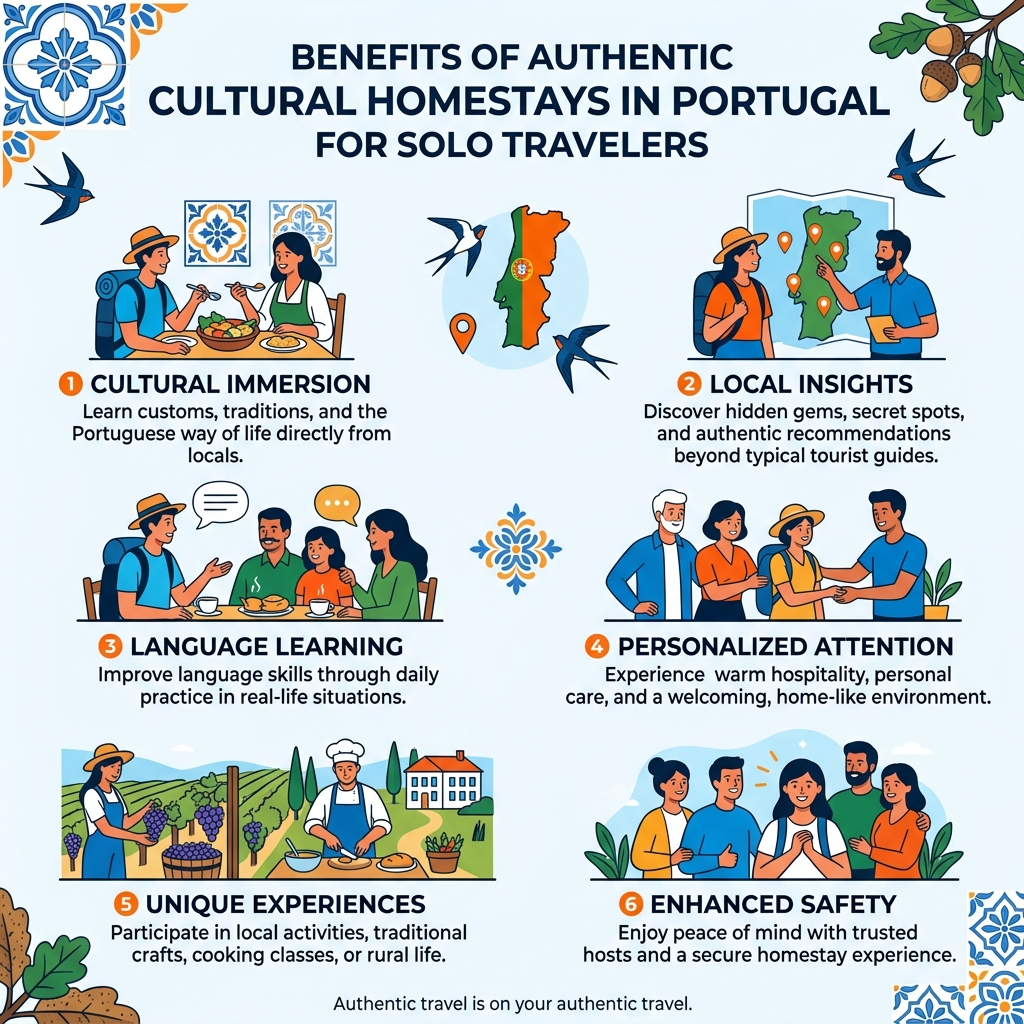
What exactly makes a stay “authentic” in the Portuguese context? It goes far beyond having a bed to sleep in. An authentic cultural homestay is defined by the human connection between the guest and the host. Unlike a standardized hotel where interactions are transactional, these stays are deeply personal.

When we talk about authentic cultural homestays portugal, we are referring to privately owned homes where the owners often live on-site. This setup allows for a unique window into daily life. You aren’t just a tourist; you are a temporary member of a Portuguese household. This might mean sharing a breakfast of fresh bread and local honey while discussing the morning news, or being invited to join a family dinner where the “insider’s guide” to the village is revealed over a bottle of regional wine.
These experiences are vital for cultural travel destinations for solo travelers because they provide a safety net and a social bridge. Your hosts act as cultural ambassadors, explaining the nuances of Portuguese etiquette or the history of a local festival. This face-to-face interaction fosters a level of cross-cultural understanding that you simply cannot get from a guidebook. It is about heritage preservation—by staying in these homes, you are helping families maintain historic properties that might otherwise fall into disrepair, ensuring that traditional Portuguese hospitality continues to thrive.
Types of Authentic Cultural Homestays Portugal
Portugal offers a surprisingly diverse array of homestay styles, catering to different interests, from high-end luxury to rugged farm life.
One of the most prestigious ways to experience this is through the Solares de Portugal network. Managed by TURIHAB, this group categorizes homes into three distinct types: Casas Antigas (stately manor houses), Quintas e Herdades (agricultural estates and farms), and Casas Rústicas (smaller, charming cottages). These properties often require a minimum stay of three nights, ensuring you have enough time to actually settle into the rhythm of the location.
For those looking for something more nature-focused, Quinta Do Rabaçal | Off-Grid Luxury Retreats in Portugal provides a stunning example of how ancient farmsteads can be transformed into eco-conscious retreats. Located in a protected nature zone, it blends luxury with off-grid living, featuring forest trails and river access. Similarly, Home – Quinta da Regada in the Serra da Estrela mountains focuses on “simple things,” offering a cottage built from local granite where guests can participate in seasonal harvests.
If you are looking for something truly unique, you might find yourself in a restored watermill like moinho do montado in the Alentejo, where 400-year-old stone walls meet modern comfort. For the adventurous solo traveler, eco-friendly glamping—think vintage caravans or suspended tents—is becoming a popular way to connect with the Portuguese landscape. If you’re wondering where to go when you’re flying solo and craving culture, these rural retreats offer the perfect balance of solitude and community.
Immersive Language and Farm Stays: Authentic Cultural Homestays Portugal
For travelers who want to do more than just observe, immersive stays offer hands-on learning. Language homestays are a fantastic option; some Portuguese teachers actually host students in their own homes, combining formal lessons with “real-world” practice during meals and daily errands. This is a highly effective way to make progress in the language while living the culture.
If you prefer getting your hands dirty, volunteer exchanges (often found through platforms like Workaway) allow you to trade a few hours of help for room and board. We see many families revitalizing old farms using regenerative agriculture and organic gardening. You might spend your mornings helping with animal care—tending to chickens, ducks, or even draft horses—and your afternoons learning traditional food-making techniques like baking bread in a wood-fired oven or preserving seasonal fruits. Knowing how to see Europe safely without a plus one often involves joining these types of structured communities where there is a clear purpose and a built-in social circle.
Historic Manors and Rural Cottages: Authentic Cultural Homestays Portugal
On the more elegant side of the spectrum are the Casas Antigas. These manor houses are often filled with antique furnishings and family heirlooms, offering a living history lesson. A stay at HOME | Quinta Do Chafariz, for instance, places you in a typical Portuguese village between Lisbon and Porto, where the hospitality is personal and “deeply human.”
These properties aren’t just museums; they are integrated into the local village life. You might find yourself walking to the local pastelaria to greet neighbors on cobblestone streets, just as the locals have done for centuries. This type of cultural travel destinations for solo travelers 2 experience allows you to enjoy high-standard amenities—like saltwater pools and WiFi—without losing the rustic charm of rural Portugal.
Top Regions for Authentic Cultural Homestays Portugal
Each region of Portugal has its own “flavor” of homestay, influenced by the local geography and history.
- The Minho (Northern Portugal): This is the birthplace of the nation and home to some of the most traditional manor houses. It is famous for its lush green landscapes, Vinho Verde, and vibrant folklore festivals.
- The Alentejo: Known for a slower pace of life, this region is perfect for those who love wide-open spaces and cork forests. You can stay in places like Casa do Bairro – Authentic Rural living in Tavira’s Santa Catarina, which offers a genuine neighborhood experience in the Algarve’s quieter hinterland. Or, for a historical deep-dive, the Vacation Home | Celtic lodge alentejo | Portugal allows you to stay in a restored “round house” dating back to the Iron Age.
- Serra da Estrela: Portugal’s highest mountain range offers dramatic scenery and homestays focused on mountain culture, sheep herding, and the famous local cheese.
- The Azores: These volcanic islands offer a completely different vibe. Homestays here often involve “Agroturismo,” where you can experience the unique island flora and fauna up close.
Practical Guide to Booking and Planning Your Stay
Planning an authentic stay requires a bit more research than booking a standard hotel. Here is what you need to know to get started.
Comparison of Homestay Types in Portugal
| Feature | Solares de Portugal | Farm Stays (Agroturismo) | Language Homestays |
|---|---|---|---|
| Primary Focus | History & Architecture | Nature & Agriculture | Language & Daily Life |
| Interaction | Moderate to High | High (Hands-on) | Very High |
| Typical Setting | Historic Estates | Rural Farmland | Urban or Village Homes |
| Best For | Luxury & Heritage | Families & Eco-travelers | Students & Solo Learners |
Booking Platforms:
- TURIHAB / Solares de Portugal: The gold standard for verified historic homes.
- Lingoo: Excellent for finding language-specific homestays with vetted families.
- Workaway: Ideal for budget-conscious travelers willing to trade labor for a cultural experience.
- CozyCozy / Airbnb: Useful for finding “unusual” stays like windmills, boats, or tiny houses.
Typical Costs and Requirements: Prices for a double room in a Solares de Portugal property generally range from €75 to €150 per night, which almost always includes a fresh, local breakfast and WiFi. That many of these historic properties require a minimum stay of three nights.
Visa and Logistics: Portugal is part of the Schengen Area. For many travelers (including those from the US, UK, and Canada), a visa isn’t required for stays under 90 days. Most international travelers fly into Lisbon (LIS), but Porto (OPO) is better for Northern stays, and Faro (FAO) is the gateway to the Algarve. While cards are widely accepted, we recommend carrying some cash for small village shops and rural cafes.
Sustainability and Community Impact
Choosing authentic cultural homestays portugal is a powerful way to practice sustainable tourism. By staying with locals, your travel funds go directly into the pockets of the community rather than large international hotel chains.
Many of these homestays are leaders in environmental protection. We see properties like Quinta da Regada working on biodiversity protection and habitat restoration. Others, like Quinta do Rabaçal, operate entirely off-grid using green energy.
Beyond the environment, these stays ensure the survival of “intangible heritage.” Hosts often organize or point you toward local artisan markets, traditional dance performances, and village festivals that aren’t on the typical tourist radar. This cultural transmission keeps Portuguese traditions alive and relevant in the 21st century.
Frequently Asked Questions about Portuguese Homestays
What is the typical cost of a homestay in Portugal?
While it varies by region and luxury level, you can expect to pay between €75 and €150 per night for a high-quality room in a historic home or farm. This usually includes breakfast. Volunteer-style stays (like Workaway) may be free in exchange for work, though there is often a small platform fee to join the network.
How much interaction should I expect with my Portuguese hosts?
This is largely up to you, but “authentic” stays usually involve daily interaction. At a minimum, expect to chat during breakfast. Many hosts offer communal dinners, guided walks of their property, or workshops. If you prefer total privacy, a self-catering “Casas Rústicas” might be a better fit than a room within a family home.
Are these homestays suitable for solo travelers?
Absolutely. In fact, we believe they are the best choice for solo travelers. They provide a built-in social connection and a level of safety and local knowledge that hotels can’t match. Hosts are often very happy to help independent travelers navigate the local area.
Conclusion
At PrimeFinHub, we believe that travel should be more than just a change of scenery—it should be a change of perspective. By choosing authentic cultural homestays portugal, you are opting for a deeper, more meaningful way to see the world. Whether you are wandering through the halls of a centuries-old manor or helping harvest olives under the Alentejo sun, these experiences stay with you long after you’ve returned home.
Ready to plan your own independent exploration? Start your journey with PrimeFinHub and discover the most immersive cultural spots Portugal has to offer.
