
Is South America Good for Solo Travel? Here’s What You Need to Know
The best south american countries for solo travel are, ranked by safety, infrastructure, and solo-friendliness:
- Uruguay – Safest overall; walkable cities; low crime
- Chile – Stable economy; great infrastructure; low harassment rates
- Argentina – Rich culture; budget-friendly exchange rates; strong tourism network
- Ecuador – Compact size; US dollar currency; home to South America’s safest city (Cuenca)
- Peru – Iconic experiences; well-worn backpacker routes; welcoming locals
- Colombia – Transformed reputation; vibrant social scene; ideal for experienced solos
South America has a reputation that scares people off. That reputation is mostly outdated — and often unfair.
The reality? Millions of solo travelers explore this continent every year without incident. The key is knowing where to go, when to go, and how to move around smartly.
Safety does vary a lot between countries — and even between cities within the same country. Uruguay, for example, ranks among the top 25% of safest countries in the world. Meanwhile, some border regions and remote areas across the continent genuinely do require extra caution.
Whether you’re drawn by ancient ruins, vibrant food scenes, dramatic landscapes, or the chance to practice your Spanish with locals — South America delivers. This guide ranks the best destinations so you can plan with confidence, not anxiety.
Top-Ranked Best South American Countries for Solo Travel
When we look at the best south american countries for solo travel, we aren’t just looking at who has the prettiest mountains. We look at the “Solo Traveler Trifecta”: Safety, Affordability, and Social Ease.
Some countries, like Uruguay, are “set it and forget it” destinations where you can wander with a high degree of peace. Others, like Argentina or Colombia, offer incredible rewards but require a bit more “street smarts.”
To help you decide where to point your compass, we’ve put together a quick comparison of the heavy hitters:
| Country | Safety Rating | Daily Budget (USD) | Top Solo City | Best Feature |
|---|---|---|---|---|
| Uruguay | Very High | $50 – $80 | Montevideo | Safety & Progressiveness |
| Chile | High | $50 – $80 | Santiago | Infrastructure & Nature |
| Argentina | Moderate | $40 – $70 | Buenos Aires | Culture & “Dolar Blue” |
| Ecuador | Moderate/High | $35 – $60 | Cuenca | Compact & US Dollar |
| Peru | Moderate | $30 – $50 | Cusco | History & Food Scene |
| Colombia | Moderate | $35 – $55 | Medellín | Social Vibe & Nightlife |
For a deeper dive into the logistics of navigating these regions, check out our comprehensive guide on solo travel in south america.
Why Uruguay is One of the Best South American Countries for Solo Travel
If you are a first-time solo traveler or someone who just wants to relax without constantly looking over your shoulder, Uruguay is your gold standard. It consistently sits in the top 25% of the world’s safest countries according to Uruguay’s global safety position.
What makes it so special? For starters, it is incredibly progressive. It was one of the first countries in the region to legalize same-sex marriage and has some of the most advanced LGBTQ+ rights on the continent. The capital, Montevideo, feels more like a laid-back European coastal city than a bustling Latin American metropolis. It’s walkable, the public transport is reliable, and the “mate” culture (where locals carry around thermals of herbal tea) creates a very communal, friendly atmosphere.
- Montevideo: Perfect for wandering through Ciudad Vieja (the old town) or enjoying the Rambla (coastal walk).
- Colonia del Sacramento: A UNESCO World Heritage site that is just a short ferry ride from Buenos Aires, but feels worlds apart in terms of pace.
- Cabo Polonio: For the truly adventurous solo traveler, this off-grid beach village has no electricity or running water in many parts—just stars, sea lions, and peace.
Argentina: Culture, Wine, and Budget-Friendly Adventures
Argentina is a land of contradictions. It has a high robbery rate—statistically the highest in 2017 with 920 per 100,000 people—yet it remains one of the most beloved destinations for solo travelers. Why? Because the rewards are massive, and the risks are manageable with situational awareness.
The “Dolar Blue” (the unofficial exchange rate) means that if you bring US dollars and exchange them locally, your purchasing power skyrockets. This makes world-class steak dinners and high-end wine tours in Mendoza surprisingly affordable.
- Buenos Aires: Often called the “Paris of the South,” it’s a digital nomad hub. You can take tango classes, visit historic libraries, and join “expat” meetups easily.
- Mendoza: The heart of wine country. We recommend renting a bike to cycle between bodegas—it’s a great way to meet other travelers.
- Patagonia: If you’re a hiker, El Chaltén is a dream. It’s a small town where everyone is there for the trails, making it very easy to find a hiking buddy at the local brewery.
While the robbery statistics sound scary, most of these incidents are non-violent petty thefts in specific crowded areas. If you practice common sense—don’t flash your iPhone 15 on a busy street corner—you’ll likely have a fantastic time.
Ecuador and the Charm of Cuenca
Ecuador is the “Goldilocks” of South America: not too big, not too small, just right. Because of its compact size, you can have breakfast in the Andes and dinner on the coast.
One of the biggest draws for us is Cuenca. It is frequently cited as the safest city in South America according to current crime indices in South America. It’s a colonial gem with a large expat community, safe tap water (a rarity on the continent!), and a very low cost of living.
- The US Dollar: Ecuador uses the USD, which eliminates the headache of constant currency conversion and math at the ATM.
- Galapagos Islands: While expensive, they are very safe for solo travelers. Many people book last-minute cruises from Puerto Ayora to save money.
- Quito: The historic center is beautiful, but requires more caution at night. Use Uber (discreetly, as it’s technically in a legal gray area) rather than hailing taxis off the street.
Safety Precautions and Avoiding Common Scams
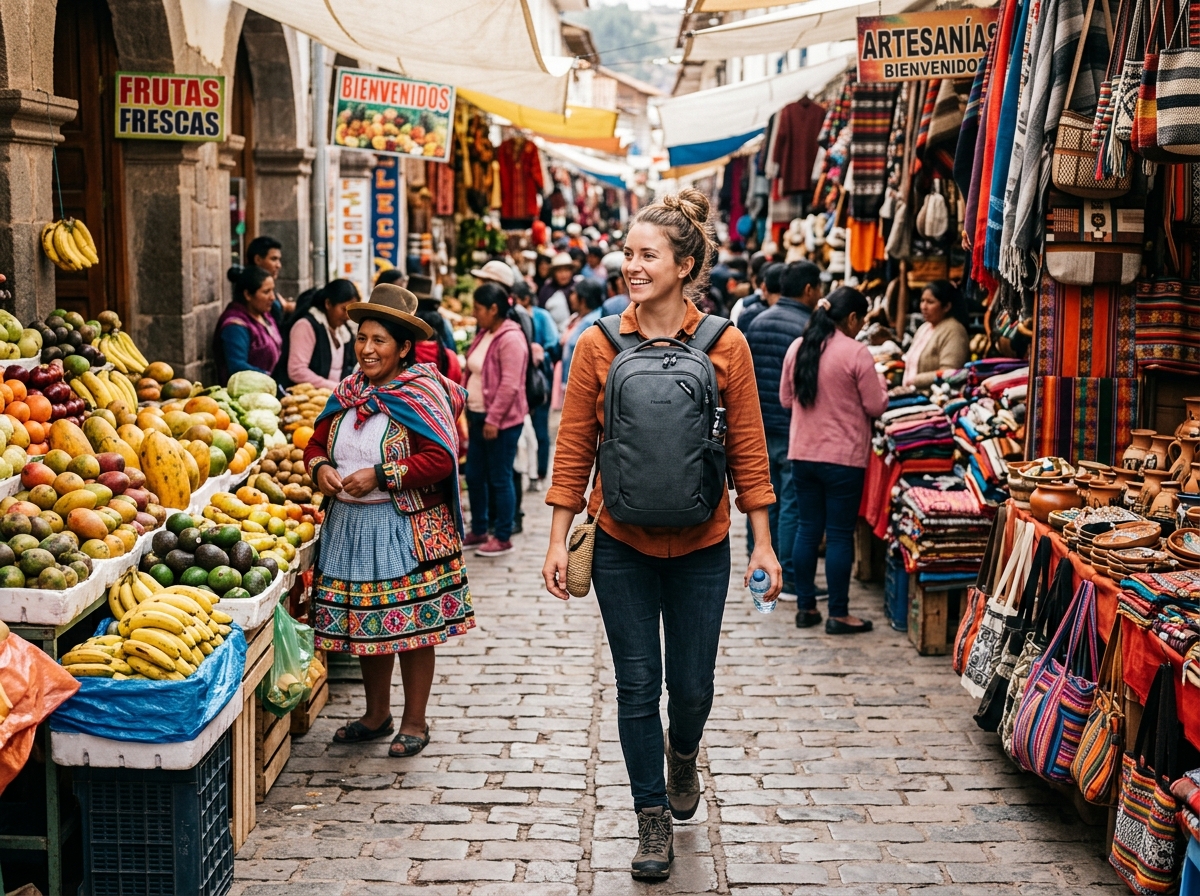
We cannot talk about the best south american countries for solo travel without talking about “No Dar Papaya.” This is a famous Colombian phrase that literally means “Don’t give papaya,” but it translates to: Don’t put yourself in a position where you can be easily taken advantage of.
If you walk around with a gold necklace and your phone in your back pocket, you are “giving papaya.” Here is how we stay safe:
- Transport at Night: Avoid night buses on “frontier” routes (like the Bogota to Quito run). They are occasionally targets for robberies. If you must travel at night, use reputable companies like Cruz del Sur in Peru, which have high security.
- The “Mustard” Scam: Someone spills something on you (mustard, “bird droppings,” etc.) and offers to help clean it up. While you’re distracted, their partner grabs your bag. If this happens, keep walking and clean it yourself later.
- ATM Safety: Only use ATMs inside banks during daylight hours. Check for “skimmers” on the card slot.
- Female-Only Spaces: In cities like Rio de Janeiro, look for female-only subway cars during rush hour to avoid unwanted attention.
- Licensed Guides: For the Amazon or high-altitude treks, never go with a random person who approaches you on the street. Always book through a licensed agency with verified reviews.
Budgeting for the Best South American Countries for Solo Travel
Your wallet will feel very different depending on which border you cross.
- The Budget King: Bolivia. You can comfortably get by on $25–$40 a day. A meal at a local market might cost you $2, and a bed in a decent hostel is around $10.
- The Mid-Range: Peru and Ecuador. Expect to spend $35–$60 a day. Machu Picchu will be your biggest expense here, so plan accordingly.
- The Splurge: Chile and Uruguay. These are the most expensive countries on the continent. Budget $50–$80 a day. Chile’s infrastructure is top-tier, but you pay for that stability.
Pro Tip: In Argentina, use Western Union to send yourself money. You’ll get the “Dolar Blue” rate, which is often nearly double the official bank rate. It’s a legal way to make your budget go twice as far!
Maximizing Your Experience with Spanish Skills and Social Connections
You don’t need to be fluent in Spanish to travel South America, but even “Spanglish” is a superpower. It changes how locals perceive you—from a “tourist” to a “guest.”
Spanish skills allow you to:
- Negotiate taxi fares before getting in.
- Understand “No Dar Papaya” warnings from friendly grandmothers.
- Order the “Menu del Dia” (the cheap, fixed-price lunch) without ending up with mystery meat.
If you’re traveling solo, you won’t be alone for long. The “Gringo Trail” is a well-established route where you’ll meet the same people over and over. Social hostels like Selina or Loki are famous for their solo-traveler scenes, but if you want something quieter, look for “boutique hostels” or guesthouses.
We also recommend joining Facebook groups like “South America Travel” or local “Expats in [City Name]” groups. They are goldmines for real-time safety updates and meeting people for a coffee or a hike.
The Role of Guided Tours for Solo Female Travelers
If the idea of navigating a bus station in La Paz sounds like a nightmare, guided tours are a fantastic bridge. Data shows that 40-60% of participants on Latin American tours are solo travelers. On some routes through Central and South America, that number exceeds 50%.
The benefits are clear:
- Social Bonding: You’re essentially “forced” to make friends with 12-16 like-minded people.
- Logistics: No worrying about who is driving the bus or if the hotel is in a “bad” neighborhood.
- Cultural Access: Tours often include homestays or cooking classes that are hard to organize independently.
For many solo female travelers, a hybrid approach works best: travel independently through “easier” countries like Uruguay, and join a group for more challenging regions like the Bolivian Altiplano or the deep Amazon.
Logistics: Best Times to Visit and How to Get Around
South America is a year-round destination, but “when” you go depends on “where” you are.
- The Andes (Peru, Bolivia, Ecuador): May to October is the dry season. This is the best time for trekking, though it’s also the busiest.
- Brazil & Argentina Beaches: December to March is peak summer. It’s hot, vibrant, and expensive.
- Shoulder Seasons: April/May and September/October are our favorites. You get 60-70% solo traveler ratios, manageable weather, and lower prices.
Getting Around
- Buses: Forget the rusty school buses of movies. Companies like Cruz del Sur (Peru) or Turbus (Chile) offer “Cama” or “Semi-Cama” seats that recline almost 180 degrees. They are often more comfortable than airplanes!
- Flights: Use internal flights to save time on massive distances (like Buenos Aires to Ushuaia). Crossing borders by bus and then flying internally is a classic budget-saving hack.
- Altitude Sickness: If you’re flying from sea level (Lima) to high altitude (Cusco), do not plan a hike for the next day. Give yourself 48 hours to acclimate. Drink coca tea, stay hydrated, and take it easy.
Frequently Asked Questions about Solo Travel in South America
Which South American countries should solo travelers approach with extra caution?
Currently, Venezuela is not recommended for solo travel due to economic and political instability. Additionally, border regions—specifically the “Triple Frontier” area and the borders between Colombia and its neighbors—can be hotspots for smuggling and require extra vigilance. Within cities, areas like El Alto in Bolivia or certain “favelas” in Brazil should only be visited with a trusted local guide.
What are the best cities for solo female travelers from Europe?
Cuenca (Ecuador) and Montevideo (Uruguay) are the top choices for safety and ease of navigation. Santiago (Chile) offers a very modern, European feel with excellent infrastructure. For those with Spanish skills looking for culture, Cusco (Peru) is a social hub where you will meet hundreds of other solo travelers.
What types of accommodation are most recommended for solo travelers?
- Social Hostels: Best for meeting people (look for those with a 4.1+ star rating).
- Women-Only Dorms: A great safety net if you aren’t ready for mixed rooms.
- Homestays: Excellent for cultural immersion and practicing Spanish.
- Boutique Guesthouses: For when you need a “vacation from your vacation” and a bit of privacy.
Conclusion
At PrimeFinHub, we believe that solo travel is one of the most empowering gifts you can give yourself. South America, with its soul, its rhythm, and its staggering beauty, is the perfect backdrop for that journey.
While the statistics on robberies in Argentina or the “macho” culture in certain rural areas are worth noting, they shouldn’t stop you. By choosing the right destinations—like the progressive streets of Uruguay or the safe havens of Cuenca—and practicing “No Dar Papaya,” you can navigate this continent with ease.
Whether you’re dancing salsa in Cali or trekking the W Trek in Patagonia, the memories you make will far outweigh the nerves you felt before booking your flight. Ready to start? Plan your next adventure with our guide to solo travel in south america and discover the immersive cultural spots that make this continent truly unforgettable.
