
The Magic of Solo Lantern Festivals in Asia: What You Need to Know
Solo lantern festivals Asia experiences rank among the most rewarding trips an independent traveler can take. Whether you want to release a sky lantern in Taiwan, walk alongside tens of thousands of lotus lanterns in Seoul, or light a personal candle in Nara’s deer park, Asia’s lantern festivals welcome solo visitors with open arms.
Here are the top solo-friendly lantern festivals in Asia at a glance:
| Festival | Country | Best Time | Solo-Friendly Rating |
|---|---|---|---|
| Taiwan Lantern Festival | Taiwan | Feb-Mar (Lunar New Year +15) | ⭐⭐⭐⭐⭐ |
| Pingxi Sky Lantern Festival | Taiwan | Feb-Mar (specific dates) | ⭐⭐⭐⭐ |
| Yi Peng / Loy Krathong | Thailand | Nov (full moon) | ⭐⭐⭐⭐⭐ |
| Yeondeunghoe Lotus Lantern Festival | South Korea | May (Buddha’s Birthday) | ⭐⭐⭐⭐⭐ |
| Nara Tokae | Japan | Aug 5-14 | ⭐⭐⭐⭐⭐ |
| Hoi An Lantern Festival | Vietnam | Monthly (full moon) | ⭐⭐⭐⭐ |
| Akita Kanto Festival | Japan | Early Aug | ⭐⭐⭐⭐ |
Going solo to a lantern festival might sound lonely on paper. In reality, it’s the opposite.
These events pull strangers together around shared light, shared wonder, and shared silence. One traveler described walking through Taiwan’s Chiayi festival surrounded by thousands of glowing installations — laughing, tasting street food, and communicating with locals through smiles and gestures alone. No tour group required.
This guide covers everything a solo traveler needs — which festivals to choose, how to get there safely, what to pack, and how to make the most of the experience on your own schedule.

Why Solo Lantern Festivals in Asia are Perfect for Independent Travelers
Choosing to attend solo lantern festivals Asia isn’t just about seeing pretty lights; it’s about the freedom that comes with independent exploration. When we travel alone, we aren’t tethered to someone else’s itinerary or energy levels. At a massive event like the Taiwan Lantern Festival, where you might easily clock 20,000 steps in a single evening, being able to pause for a pork rice dumpling whenever you please is a luxury.
Safety is a primary concern for any solo explorer, but many of these host countries—particularly Taiwan, Japan, and South Korea—consistently rank among the safest destinations globally. The community discipline at these events is often staggering. In Taiwan, for instance, visitors have noted a “litter-free” culture even amidst crowds of thousands, where people carry their own trash until they find a bin. This respectful atmosphere makes it much easier for a solo traveler to feel secure and welcome.
Traveling alone also grants us total “photography freedom.” You can spend forty minutes perfectly framing a shot of the Alishan-inspired main lantern without worrying about an impatient companion. Furthermore, these festivals are surprisingly social. Whether it’s sharing a bench with a local family in Nara or joining a lantern-making workshop in Seoul, the shared “glow” of the event acts as a natural icebreaker. If you’re looking for more tips on navigating solo journeys, check out our guide on how to see Europe safely without a plus-one for universal safety principles that apply just as well in Asia.
Top Solo Lantern Festivals in Asia: A Comparative Guide
Not all lantern festivals are created equal. Some are high-energy spectacles with fireworks and drones, while others are quiet, meditative affairs rooted in ancient religious traditions.
| Feature | Taiwan Lantern Festival | Yi Peng (Thailand) | Yeondeunghoe (Korea) | Nara Tokae (Japan) |
|---|---|---|---|---|
| Primary Vibe | High-tech spectacle | Spiritual/Ethereal | Communal/Traditional | Quiet/Intimate |
| Participation | Handheld lanterns | Releasing sky lanterns | Parade & Workshops | Lighting a candle |
| Scale | Massive (Rotating City) | Medium (Chiang Mai) | Large (Seoul) | Small (Nara Park) |
| Eco-Factor | High (Static displays) | Improving (Biodegradable) | High (Paper/Bamboo) | High (Candles) |
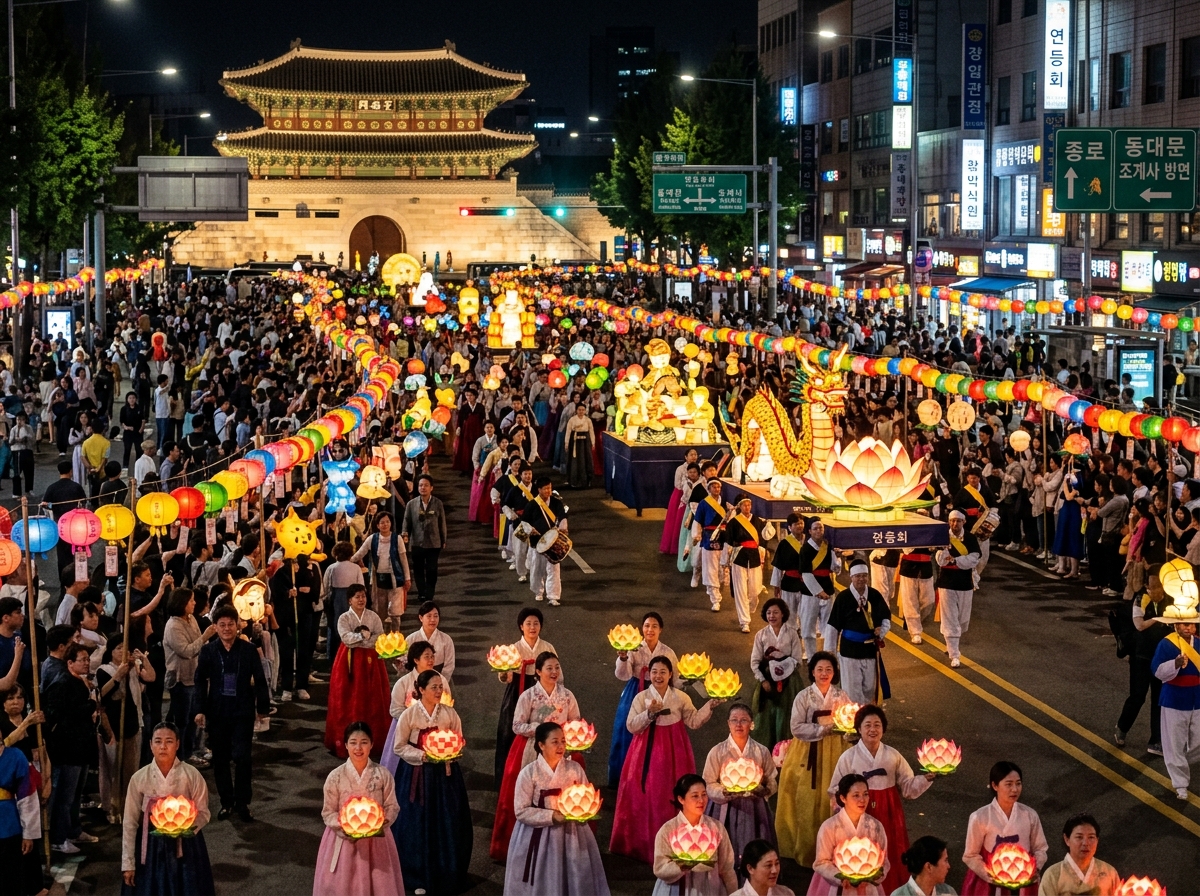
One of the most profound experiences for a solo traveler is the Yeondeunghoe Lotus Lantern Festival in Seoul. Recognized by UNESCO as an Intangible Cultural Heritage, this festival isn’t just a show—it’s a living tradition. The Grand Parade stretches over 3.5 kilometers from Heunginjimun Gate to Jogyesa Temple. As a solo visitor, you can join a lantern-making workshop for a small fee (usually ₩5,000–₩15,000) and actually carry your creation in the parade. It’s a powerful way to move from being a spectator to a participant in Korean culture.
Navigating the Taiwan Lantern Festival and Pingxi as a Solo Explorer
In Taiwan, there is often confusion between the Taiwan Lantern Festival and the Pingxi Sky Lantern Festival. For the solo lantern festivals Asia enthusiast, understanding the difference is key.
The Taiwan Lantern Festival is a national event that rotates host cities every year. In 2026, the festival will be held in Chiayi County, featuring a “Year of the Horse” theme and a massive main lantern titled “Alishan, Veiled in Luminous Mist.” This festival focuses on static, high-tech installations, art pieces, and projections. It is highly sustainable because it doesn’t involve releasing fire into the sky. You can easily reach Chiayi from Taipei via the High-Speed Rail (HSR) in about 1.5 hours. Once there, you’ll see the official mascot, OhBear, everywhere on handheld lanterns.
The Pingxi Sky Lantern Festival, held in the mountain villages of Pingxi and Shifen, is where the iconic “floating lantern” photos come from. While beautiful, it requires more logistics. On main release nights, up to 80,000 people descend on tiny villages. For a solo traveler, we recommend taking the train from Taipei to Ruifang and then transferring to the Pingxi Line. To avoid the most intense crowds, consider visiting Shifen Old Street on a non-festival day; lanterns are released year-round there, offering a much more relaxed experience. For those who love combining festivals with history, our George Town and beyond guide offers great insights into Asian heritage walks that pair perfectly with a Taiwan itinerary.
Finding Zen at Japan’s Solo Lantern Festivals in Asia
Japan offers a different, more somber kind of magic. The Nara Tokae Lantern Festival is a standout for solo travelers because of the “Ikyaku Ittou” (one person, one light) tradition. For a ¥500 donation, you can light your own candle lantern in the fields of Nara Park. There is something deeply personal about kneeling in the grass, surrounded by thousands of flickering lights and the occasional wandering deer, to make a private wish.
If you prefer something more energetic, the Akita Kanto Festival in northern Japan is a masterclass in balance and community spirit. Performers balance 50kg poles (kanto) carrying up to 46 lanterns on their foreheads, shoulders, or hips. It’s a 270-year-old tradition meant to pray for a bountiful harvest. Solo travelers can easily book reserved seating through the official website to ensure a great view without having to fight for a spot in the crowd.
Finally, the Chugen Mantoro at Kasugataisha Shrine is held during Obon (August 14-15). Over 3,000 lanterns illuminate the ancient shrine grounds. Walking through the stone-lantern-lined paths in the dark is a transformative experience that feels like stepping back 800 years in time.
Practical Logistics for Your Solo Lantern Festivals Asia Itinerary
Planning a trip around solo lantern festivals Asia requires a bit more foresight than a standard city break. Because these festivals are tied to the lunar calendar, dates shift every year. Always double-check official tourism boards before booking flights.
Transport and Passes
In Taiwan, the High-Speed Rail (HSR) is your best friend. We recommend buying an HSR pass if you plan to visit multiple cities like Taipei, Chiayi, and Tainan. In South Korea, the T-money card works for all subways and buses in Seoul. For Japan, the Kintetsu Line is the most convenient way to get from Kyoto or Osaka to Nara for the Tokae festival.
Accommodation and “Festival Hubs”
Book your accommodation at least 3-4 months in advance. For the Taiwan Lantern Festival in Chiayi, consider staying near the Chiayi HSR station or in the city center. For solo travelers, boutique hostels often offer private pods that give you the social vibe of a hostel with the privacy of a hotel.
Packing Essentials
- Layers: February in Taiwan or May in Seoul can be unpredictable. Pack a light rain jacket and layers.
- Walking Shoes: You will likely walk 10,000 to 20,000 steps a day. Comfort beats fashion here.
- Power Bank: Between navigation and taking hundreds of lantern photos, your phone battery will drain fast.
- Local SIM: Having data for translation apps and Google Maps is a safety essential for solo travelers.
Combining with Nearby Attractions
Don’t just fly in for the lanterns!
- Chiayi: Combine the festival with a trip to Alishan National Forest. Take the historic mountain railway to see the “sea of clouds” at sunrise.
- Nara: Spend the morning at the Todai-ji Temple (home to the Great Buddha) before the lanterns are lit at sunset.
- Seoul: Visit the Bukchon Hanok Village or hike Bukhansan National Park during the day before the evening parade.
Safety and Crowd Management for Solo Lantern Festivals Asia
While these festivals are generally safe, the sheer volume of people can be overwhelming. Here are our top tips for managing the crowds:
- Arrive Early: For the Pingxi releases or the Seoul Grand Parade, arrive at least 2 hours before the scheduled start to claim a spot.
- Identify Exit Routes: As soon as you arrive, take note of where the nearest medical tent and exit paths are.
- Hydration and Snacks: Food lines can be incredibly long. Carry a water bottle and a few granola bars so you aren’t forced to stand in a 30-minute queue when you’re hungry.
- Translation Apps: Download the local language for offline use on Google Translate. It’s a lifesaver when trying to ask for directions or ordering specific street foods.
- Pickpocket Awareness: While rare in these regions, crowded festivals are prime spots for opportunistic theft. Use a crossbody bag with a zipper and keep it in front of you.
Sustainable and Eco-Friendly Practices for Conscious Travelers
As solo travelers, we have a responsibility to minimize our footprint. The environmental impact of lantern festivals is a hot topic, particularly regarding sky lanterns.
In Chiang Mai, the Yi Peng Lantern Festival has faced criticism for lanterns landing in forests or interfering with flights. To be a conscious traveler, only participate in organized events that use biodegradable rice paper and bamboo frames. Many local groups now organize morning cleanups the day after the festival—joining one is a fantastic way to meet locals and give back to the community.
The Taiwan Lantern Festival has led the way in sustainability by moving away from sky lanterns entirely. Their massive installations use LED technology and recycled materials. For example, the 2026 main lantern uses recycled wood to symbolize the Alishan forest. By choosing to attend static display festivals over mass sky releases, you are supporting a more sustainable future for these cultural traditions.
Frequently Asked Questions about Solo Lantern Festivals in Asia
Is it safe to attend mass lantern releases alone?
Yes, it is very safe. Countries like Taiwan, Japan, and South Korea have very low crime rates. The main “danger” is the crowd itself. Stay toward the edges of the crowd if you feel claustrophobic, and always have your accommodation address written down in the local language in case your phone dies.
Which Asian lantern festival is the most eco-friendly?
The Taiwan Lantern Festival (national rotation) and Nara Tokae are among the most eco-friendly. Taiwan uses reusable LED installations and static displays, while Nara uses simple candles in reusable glass or paper cups.
How do I use public transport to reach remote festival sites?
For Pingxi, use the dedicated festival shuttle buses that run from Taipei Zoo or the Ruifang train station. For the Taiwan Lantern Festival, the host city usually provides free shuttle buses from the nearest HSR or TRA train stations. Always check the official festival website for “Access” or “Transportation” maps a few weeks before the event.
Conclusion
There is a unique kind of bravery in standing alone under a sky filled with thousands of glowing wishes. Whether you are navigating the bustling night markets of Chiayi or finding a moment of Zen in a Nara temple, solo lantern festivals Asia offer a rare blend of spectacular beauty and deep personal reflection.
At PrimeFinHub, we believe that independent travel is the fastest route to cultural understanding. These festivals aren’t just photo opportunities; they are invitations to see the world—and yourself—in a different light. So, pack your layers, charge your camera, and get ready to glow solo. Your seat at the festival is waiting.
For more immersive cultural guides and solo travel tips, visit us at https://www.primefinhub.com/.
