
Why Street Art Solo Asia Is the Cultural Journey You’ve Been Missing
Street art solo Asia is one of the most rewarding ways to explore the continent’s cities — and you don’t need a group tour or a big budget to do it.
Here’s a quick snapshot of the best places to start:
| City | Top District | Highlight |
|---|---|---|
| George Town, Penang | Old Town | Interactive murals by Ernest Zacharevic |
| Delhi, India | Lodhi Colony | India’s first public art district |
| Bangkok, Thailand | Soi Charoen Krung 32 | Open-air Chinatown gallery alleys |
| Singapore | Kampong Gelam / Haji Lane | Commissioned murals + outdoor gallery |
| Seoul, South Korea | Ihwa Mural Village | Art-led urban regeneration |
| Solo (Surakarta), Indonesia | City Center | Walkable murals in a laid-back Javanese city |
| Hong Kong | Art Lane, Sai Ying Pun | Annual street art festival + hidden walls |
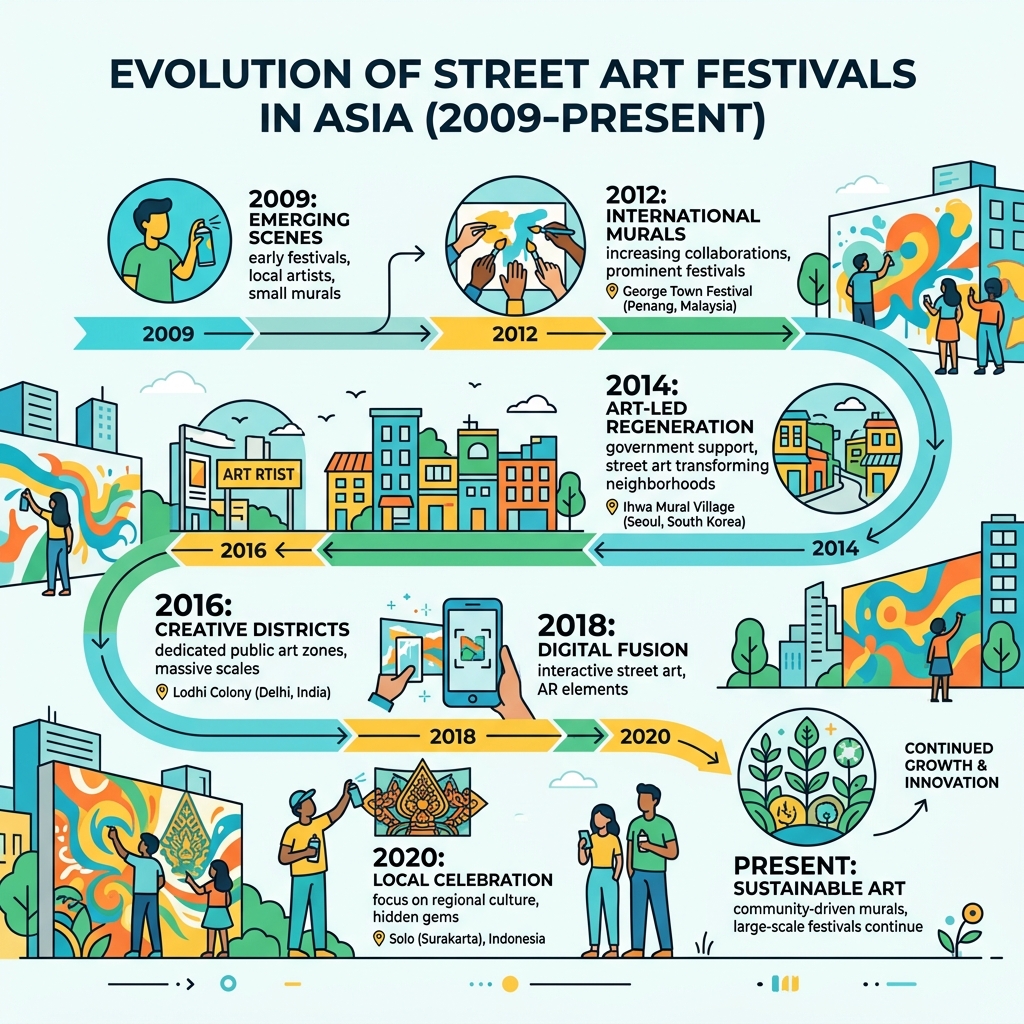
Asia’s street art scene has exploded over the past decade. What started as underground graffiti in narrow alleys has grown into government-commissioned murals, open-air galleries, and international art festivals.
And the best part? Most of it is completely free to explore on your own.
Cities like Penang, Seoul, and Singapore have made their murals so accessible that a good pair of walking shoes is genuinely all you need. Others, like Solo in Java, Indonesia, are hidden gems — small enough to cover on foot in a day, rich enough to leave a lasting impression.
Whether you’re drawn to politically charged artivism, vibrant cultural heritage scenes, or just want a striking photo backdrop, Asia’s walls have something to say.
The Best Cities for Street Art Solo Asia
When we talk about street art solo Asia, we have to start with the “Big Three” that paved the way for the mural movement. These cities have transformed their urban landscapes into massive, open-air museums that celebrate local history and modern creativity.
George Town, Penang: The Pioneer
George Town is arguably the street art capital of Asia. The movement here gained worldwide recognition in 2012 when the George Town Festival commissioned Lithuanian artist Ernest Zacharevic to create a series of six murals. These pieces, like the famous Kids on a Bicycle, are iconic because they incorporate physical objects — a real bicycle or a motorcycle — into the painting.
But the art goes deeper than murals. In 2009, the city commissioned 52 metal rod art installations. These sculptures act as caricatures that tell the story of the city’s history and culture in a witty, visual way. For those of us traveling independently, this city is a dream. You can easily spend a few days getting lost in the UNESCO-listed Old Town. For more tips on navigating this heritage hub, check out our George Town and beyond: A solo traveler’s guide.
Lodhi Colony, Delhi: India’s First Art District
In 2014, the St+Art foundation invited 50 street artists to paint murals in Delhi’s Lodhi Colony, effectively creating India’s first public art district. The architecture here — with its high arches and symmetrical blocks — provides a perfect canvas. We love how the murals here reflect Indian culture, like the Letters to Lodhi piece inspired by Indian matchboxes, or the massive tribute to Mahatma Gandhi on the Police Headquarters. It’s best explored by hiring an autorickshaw for a couple of hours to hop between the massive blocks.
Bangkok, Thailand: Chinatown’s Hidden Gems
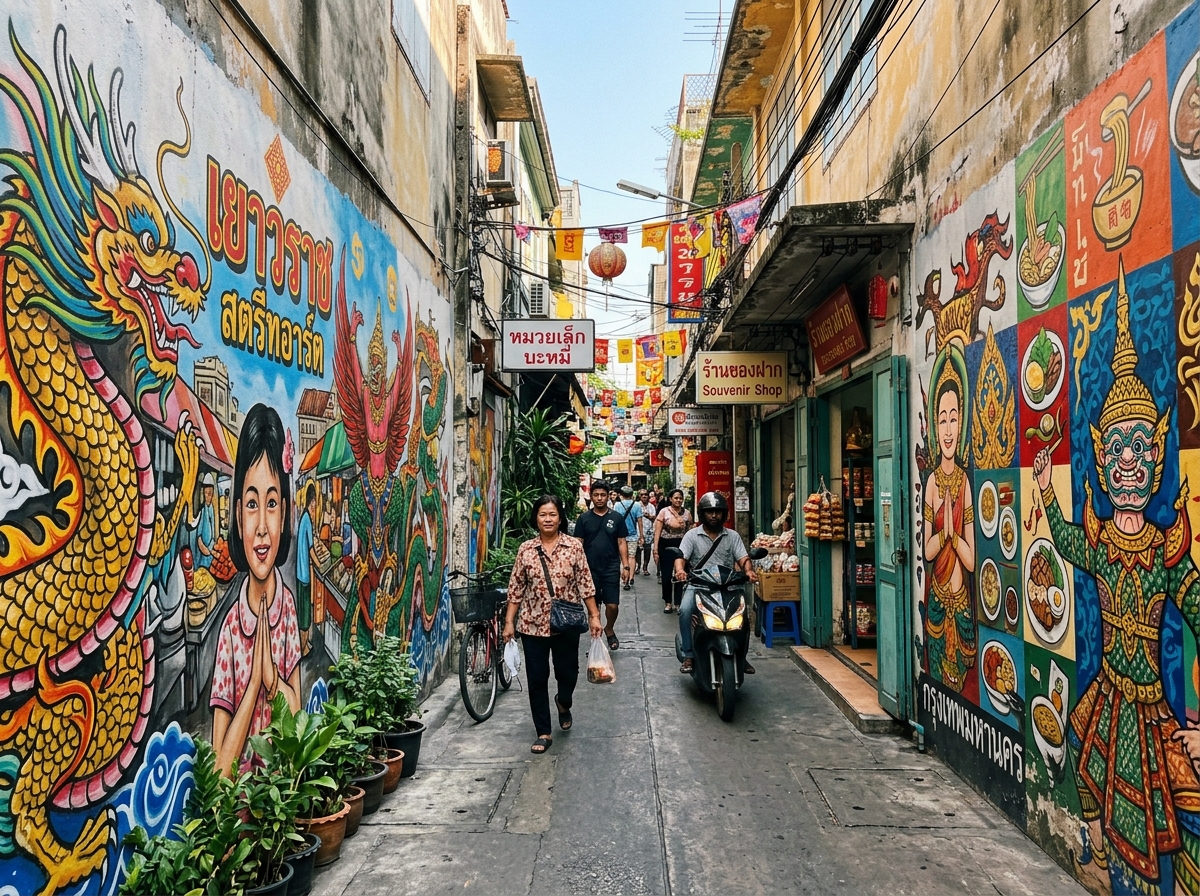
Bangkok’s street art scene is a vibrant mix of pop art and traditional Thai influences. While many tourists stick to the shopping malls, we recommend heading to Soi Charoen Krung 32 in Chinatown. This narrow alley, once just a spot for street food vendors, is now a thriving gallery. You’ll find surreal portraits and bold graffiti by artists like Jecks and Alex Face (known for his signature three-eyed character).
Must-See Districts for Street Art Solo Asia
If you are looking for specific neighborhoods that offer a high “mural-per-mile” ratio, these districts are essential additions to your street art solo Asia itinerary:
- Kampong Gelam, Singapore: This is the heritage Arab/Muslim quarter and one of the first places to embrace street art in the Lion City. Haji Lane is the most famous stretch, but don’t miss the Gelam Gallery, Singapore’s first outdoor art gallery, which turned back alleys into curated spaces.
- Ihwa Mural Village, Seoul: Located on a hillside, this village was saved from demolition by a government-led art project. It’s a steep climb, but the paintings of daily Korean life and the views of the city are worth the hike.
- Ximending, Taipei: Known as the “Harajuku of Taipei,” this district is a neon-lit playground for youth culture. Look for the Rainbow Six zebra crossing, which celebrates Taiwan’s landmark legalization of same-sex marriage. It’s a perfect spot for those exploring Solo travel hotspots for beginners.
- Art Lane, Hong Kong: Located in Sai Ying Pun, this area features murals by both local and international artists. It’s a more modern, polished take on street art compared to the grit of other cities, but equally impressive.
Discovering the Murals of Solo, Indonesia
While Yogyakarta often gets all the attention as Java’s cultural capital, the city of Solo (officially known as Surakarta) is a hidden gem for street art solo Asia enthusiasts. We find it fascinating that almost no one in Indonesia calls it Surakarta; even the train tickets and station signs simply say “Solo.”
Solo is a laid-back town, perfect for a one or two-day trip after you’ve finished exploring the temples of Borobudur and Prambanan in Yogyakarta. The best way to get there is a short, scenic train ride from Yogyakarta; both cities’ stations are located right in their respective centers, making the transition seamless for solo travelers.
A Walkable Art Scene
The beauty of Solo lies in its walkability. Most of the city’s vibrant murals are concentrated in the city center. You don’t need a complicated map; just start walking from the main thoroughfares into the side streets. The art here often reflects local Javanese heritage, traditional wayang (shadow puppets), and daily life.
Because Solo is less touristy than its neighbor, you can enjoy the art without the long queues often found in Penang. It’s an authentic experience for those looking for Solo travel hotspots for beginners 2 who want to get off the beaten path without feeling overwhelmed.
Influential Artists Shaping the Street Art Solo Asia Scene
The walls of Asia aren’t just decorated by random taggers; they are curated by world-class artists who blend traditional techniques with modern urban grit.
Chen Yingjie (Hua Tunan)
Born in Foshan, China, Chen Yingjie is a master of what he calls “splattered ink.” His style is a breathtaking fusion of traditional Chinese ink painting and Western street art graffiti. His solo exhibition Chen Yingjie “UTMOST” showcased how he applies these techniques to massive walls, creating powerful, energetic pieces that look like they are moving.
Cloakwork
Based in Kuala Lumpur, Malaysia, Cloakwork is an illustrator whose colorful, humorous murals can be found from Japan to South Korea. He often incorporates local culture into his work, making the walls feel “alive.” For him, street art is about youth and freedom. You can dive deeper into his philosophy in this profile on Cloakwork’s Street Art.
Heesco
Khosnaran Khurelbaatar, known as Heesco, is a Mongolian-Australian artist who has gained international fame for his large-scale murals. While he has transformed small towns in Australia, his roots remain in Ulaanbaatar, where he curated a massive 100m mural for the United Nations. Learn more about his journey About Heesco.
Cyril Kongo
A French-Vietnamese artist often called the “Graffiti Alchemist,” Cyril Kongo bridges his dual heritage through vibrant, chromatic works. His art often explores themes of love, knowledge, and generosity, transcending cultural barriers. His journey is well-documented in Cyril Kongo: Graffiti Alchemist.
Lousy
In the bustling streets of Hong Kong, the artist Lousy is ubiquitous. Despite his fame and debut in major art fairs, he chooses to remain anonymous, believing that the art should speak for itself. His “loud and unapologetic” style has become a staple of the city’s urban landscape. Read about his transition from the streets to the gallery in Artist Lousy’s journey.
Anagard
Based in Yogyakarta, Anagard is known for his murals featuring animal masks and strong social messages. His work often addresses anti-extremism and the protection of local livelihoods, proving that street art solo Asia is often a platform for vital social commentary.
Signature Styles and Cultural Messages
Street art in Asia is rarely just about aesthetics; it’s a powerful tool for “artivism.”
- Environmentalism: The Splash and Burn project, curated by Ernest Zacharevic, is a prime example. This campaign uses street art to raise awareness about the environmental impact of unsustainable palm oil production in Southeast Asia. For those visiting Tropical destinations for solo travelers, seeing these pieces adds a layer of depth to the travel experience.
- Social Milestones: As mentioned, Taipei’s Rainbow Six crossing isn’t just a photo op; it’s a celebration of civil rights.
- Urban Regeneration: In cities like Seoul and Singapore, street art is used to revive aging neighborhoods, turning “decaying” areas into vibrant cultural hubs that attract tourism and support local businesses.
Interactive and Alternative Urban Art Forms
One of the most exciting trends in street art solo Asia is the move beyond flat murals into 3D and interactive pieces.
The Interactive Murals of Penang
Ernest Zacharevic’s work changed the game by encouraging people to become part of the art. Whether you are “sitting” on a swing next to painted children or “riding” the back of a real motorcycle, these pieces invite engagement. This interactivity is a huge draw for solo travelers who want to capture fun, creative memories of their trip.
Metal Rod Installations
In George Town, the 52 metal rod installations are more than just art; they are historical markers. Each one tells a story about the specific street it stands on — like the history of traditional trades or local legends. They are durable, witty, and uniquely Penang.
Gelam Gallery and Yip Yew Chong
In Singapore, the Gelam Gallery offers a curated outdoor experience where you can see different styles in a single back-alley stroll. Meanwhile, local artist Yip Yew Chong has become famous for his detailed heritage murals. His 44m-long mural at Thian Hock Keng temple depicts the life of early Hokkien immigrants, while his Chinatown pieces show scenes of traditional letter writers and Cantonese opera. These are must-sees for anyone Where to go when you’re craving culture or seeking Cultural travel destinations for solo travelers.
Practical Tips for Your Street Art Solo Asia Adventure
Navigating these cities as a solo traveler requires a bit of planning to beat the heat and the crowds.
Walking vs. Cycling
In many Asian cities, your method of transport depends on the district’s density.
| Method | Best For | Pros | Cons |
|---|---|---|---|
| Walking | Solo (Indonesia), Kampong Gelam (Singapore), Chinatown (Bangkok) | Best for spotting hidden details in small alleys. | Can be exhausting in high humidity. |
| Cycling | George Town (Penang) | Covers more ground; George Town is relatively flat. | Navigating traffic while looking for art can be tricky. |
| Autorickshaw | Lodhi Colony (Delhi) | Efficient for large distances between blocks. | Requires price negotiation. |
Navigation and Timing
- Use Google Maps: Most famous murals are now pinned on Google Maps. We recommend downloading offline maps so you can navigate without using too much data.
- Beat the Heat: Start your exploration as early as possible (around 7:00 AM or 8:00 AM). Not only is the lighting better for photography, but you’ll also avoid the peak midday sun and the heavy tourist crowds.
- Safety First: While most street art districts are safe, always be mindful of your surroundings, especially in narrow alleys. For more safety advice, check out Solo travel hotspots for beginners 3 and our guide on Solo travel adventure destinations.
Navigating Street Art Solo Asia Safely
When exploring independently, it’s important to respect local etiquette. In places like Ihwa Mural Village, people actually live in these houses. Keep your voice down and avoid blocking doorways. In Singapore and Penang, the art is often commissioned, so it’s highly protected, but in other areas, it exists in a “grey area.” Always be respectful of the art and the community it lives in. For more on cultural respect, see our tips on Cultural travel destinations for solo travelers 2.
Frequently Asked Questions about Asian Street Art
Why is the city of Surakarta commonly called Solo?
The name “Solo” comes from the village of Sala, which was the original site where the Mataram Sultanate built its palace in the 18th century. Over time, “Solo” became the common name used by locals and travelers alike, while “Surakarta” remains the formal, administrative name. For travelers, it’s much easier to remember and is the name you’ll see on all train schedules!
How can solo travelers find hidden murals in large Asian cities?
The best way is to combine technology with local curiosity. Use apps like Instagram (searching hashtags like #SingaporeStreetArt or #PenangStreetArt) to see recent finds. However, the most rewarding discoveries often come from simply wandering into back alleys and side streets. Many hotels and tourism offices in hubs like George Town also provide free paper maps specifically for street art tours.
Is street art legal in most Asian countries?
It varies wildly. In Singapore and Penang, much of the prominent street art is commissioned or sanctioned by the government as part of tourism and cultural initiatives. In other places, like parts of Hong Kong or Indonesia, it exists in a legal “grey area.” However, the trend is moving toward acceptance, with many cities hosting festivals that invite artists to paint legally on public walls.
Conclusion
At PrimeFinHub, we believe that the best way to understand a city is to look at its walls. Street art solo Asia offers an unparalleled window into the soul of the continent — from the interactive, history-rich streets of Penang to the quiet, walkable murals of Solo.
These urban galleries prove that art isn’t just for museums; it’s for the people, the streets, and the independent explorers who are willing to look for it. Whether you’re a seasoned traveler or just starting your journey, Asia’s street art scene is waiting to be discovered.
For more immersive cultural spots and independent exploration tips, Visit PrimeFinHub for more solo travel inspiration. We specialize in compiling the top cultural destinations tailored specifically for the solo adventurer. Happy exploring!
