
Why European Cultural Photography Tours Are Worth Your Time
European cultural photography tours combine guided travel with hands-on photography instruction across some of the world’s most photogenic destinations.
Europe is one of the richest continents on earth for photographers. Medieval cities, mountain landscapes, ancient monasteries, and living traditions all exist within a few hours of each other.
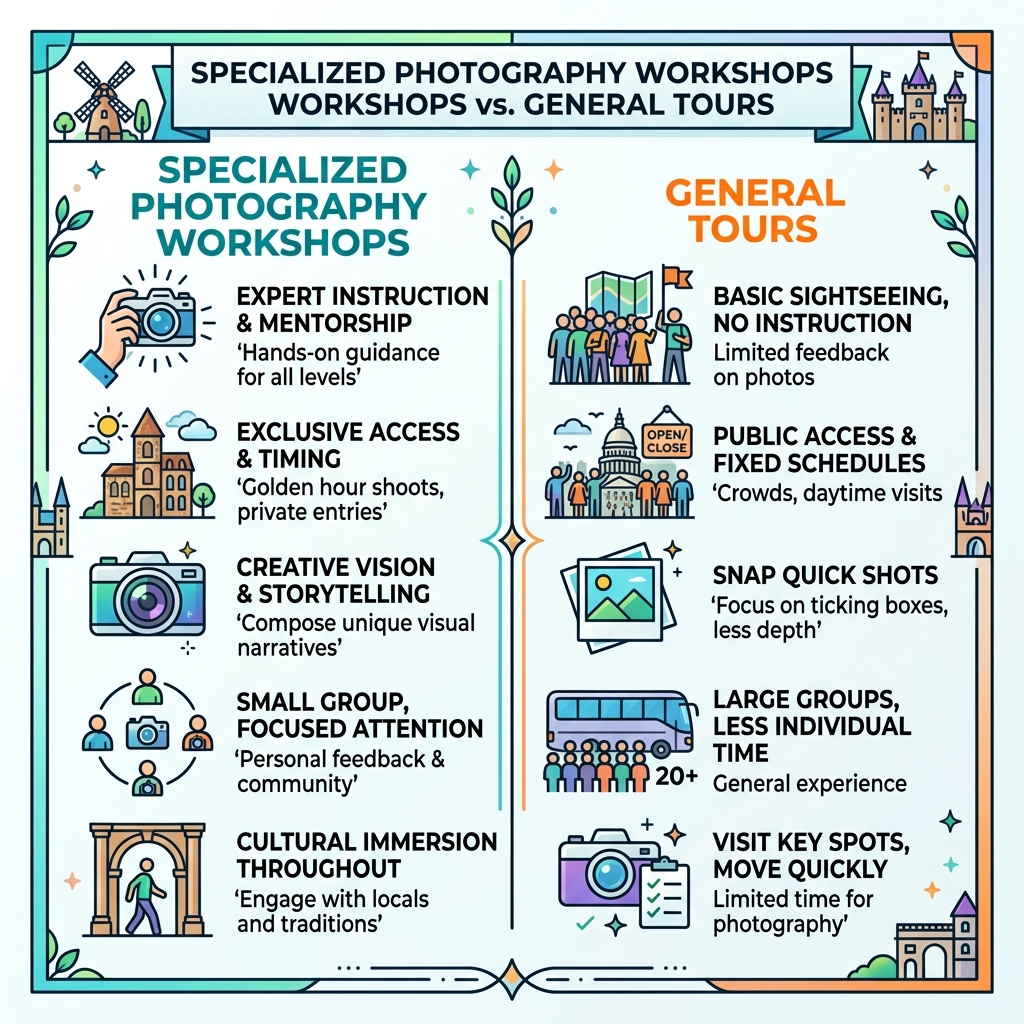
But here’s the thing: knowing where to point your camera is only half the challenge. Knowing when to show up, who to talk to, and how to compose a frame that tells a real story — that’s where a structured photography workshop changes everything.
Whether you want to photograph Dubrovnik’s ancient walls at golden hour, capture Romania’s haymaking villages, or frame Tuscany’s cypress-lined roads at dawn, a guided photography tour gives you access to all of it — with expert instruction built in.
These tours aren’t just for professionals. Most welcome beginners through semi-pros, and many accept all camera types, including smartphones.
Solo traveler? Small group sizes (often just 4-8 people) mean you get personal attention without feeling locked into a rigid group dynamic.
Top Destinations for European Cultural Photography Tours
When we look at the map of Europe through a viewfinder, certain regions stand out for their sheer density of “visual stories.” A great photography tour isn’t just about pretty pictures; it’s about cultural immersion. We want to help you find places where the history is etched into the faces of the locals and the stones of the buildings.
From the rugged coastlines of the Balkans to the mist-covered hills of Romania, the options are vast. Many of these tours focus on UNESCO World Heritage sites, ensuring you are capturing locations of “outstanding universal value.” If you want a broader reference point for protected landmarks across the region, the UNESCO World Heritage Centre is a useful resource when researching destinations.
| Region | Primary Photography Style | Key Cultural Highlight | Best For |
|---|---|---|---|
| Balkans (Croatia) | Architecture & Seascape | Dubrovnik’s City Walls | History buffs & light seekers |
| Eastern Europe (Romania) | Documentary & Portrait | Traditional Haymaking | Authentic rural immersion |
| Central Italy (Tuscany) | Landscape & Art | Renaissance Hilltop Towns | Golden hour enthusiasts |
| Western Europe (France) | Architectural & Lifestyle | Loire Valley Chateaus | Fairy-tale aesthetics |
| Scandinavia (Norway) | Nature & Night | Northern Lights | Low-light technique lovers |
The Balkan Charm of Croatia and Romania
If you are craving culture while flying solo, the Balkans and Romania offer an unmatched raw beauty. In Croatia, the focus is often on the “Pearl of the Adriatic.” Imagine standing on the Dubrovnik walls at sunrise, the limestone glowing orange as the first light hits the terracotta roofs. Beyond the coast, tours often head to Plitvice Lakes, where 16 terraced lakes and cascading waterfalls provide a masterclass in long-exposure water photography.
Romania, however, is where you find the “soul” of old Europe. Cultural photography tours here take you into the Maramureș region, often called the “Land of Wood.” Here, you’ll photograph the “Merry Cemetery” with its hand-painted blue crosses and the UNESCO-listed painted monasteries of Bucovina, where exterior frescoes tell 500-year-old stories. It is a place where horse-drawn carts are still more common than tractors, offering endless opportunities for documentary-style shooting.
Timeless Landscapes in Tuscany and the Loire Valley
For those who prefer a more refined, “painterly” aesthetic, Tuscany and the Loire Valley are the gold standards. Tuscany is the birthplace of the Renaissance, and its landscapes reflect that harmony. You will find yourself framing iconic cypress-lined roads, rolling golden wheat fields, and hilltop towns like San Gimignano and Pienza.
In France, the Loire Valley offers a “fairytale” experience. With over 300 chateaus, photography here focuses on majestic architecture and formal gardens. Spring tours in May are particularly stunning, as the fields come alive with yellow rapeseed and blue flax, providing a vibrant foreground for the stone turrets of Saumur or Chambord. These regions are perfect for those who want to combine their love of photography with world-class wine and slow-paced exploration.
Mastering the Craft: Skills and Techniques
One of the biggest differences between a general holiday and european cultural photography tours is the educational component. You aren’t just being driven to a viewpoint; you are being taught how to see.
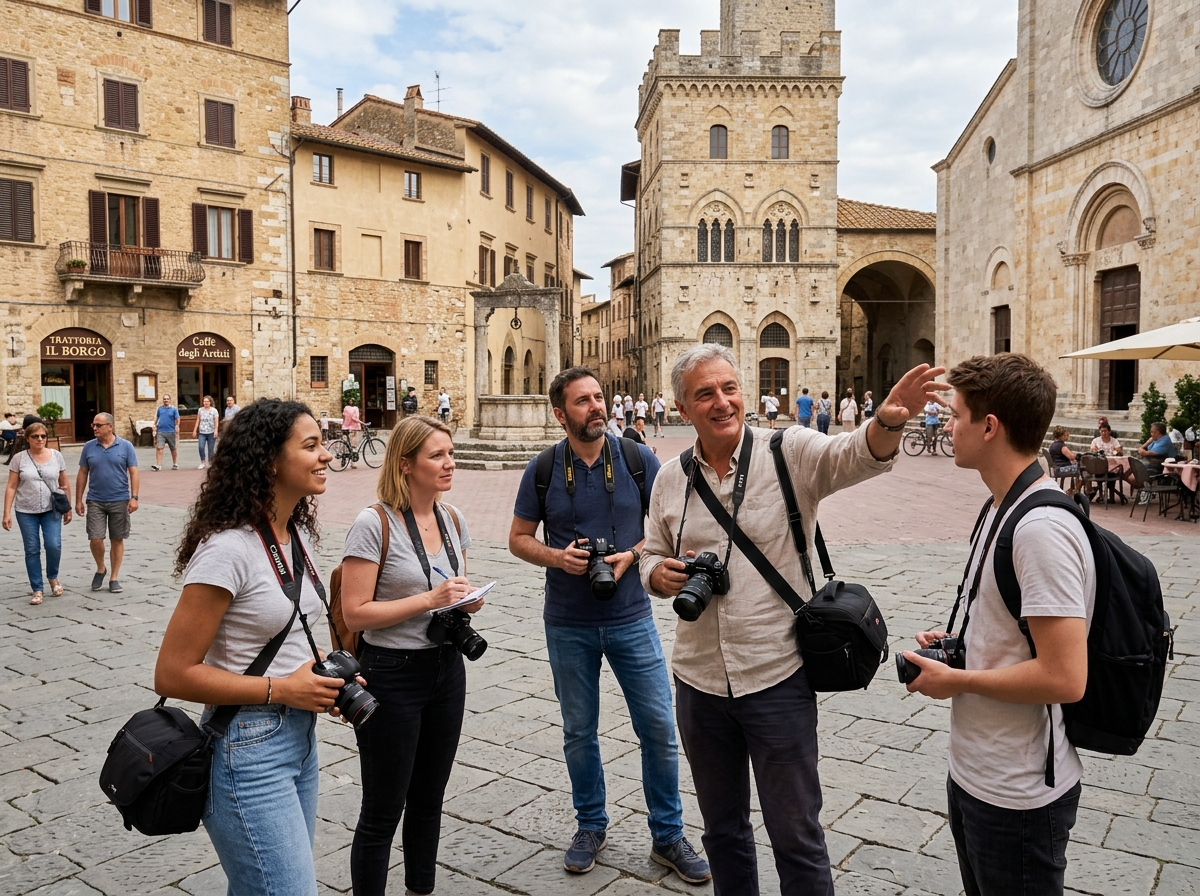
Professional guides often use a “slow photography” approach. Instead of rushing from one spot to another, you might spend two hours in a single village square, learning how to “work a scene” as the light shifts.
Essential Skills Taught in European Cultural Photography Tours
Regardless of your current skill level, these workshops are designed to level up your technical and creative abilities. Many operators include daily image reviews, which we find to be the most valuable part of the experience. Sitting down with a pro to look at your day’s work helps you identify patterns and fix mistakes in real-time.
Key techniques often covered include:
- Lighting Mastery: Understanding the “Golden Hour” and “Blue Hour,” and how to manage the harsh midday sun in bright limestone cities.
- Composition Rules: Moving beyond the “rule of thirds” to explore leading lines, framing, and visual balance.
- Advanced Camera Functions: Learning panoramic stitching for those wide Alpine vistas or long-exposure techniques for the waterfalls of Croatia.
- Post-Processing: Many tours suggest bringing a laptop so you can learn Lightroom or Photoshop workflows, including color correction and luminosity masks.
If you’ve enjoyed exploring heritage walks in Asia, you’ll find that the European approach to architectural photography requires a similar eye for detail but often deals with much older, more varied stone textures and Renaissance proportions.
Capturing the Soul of Local Cultures
The “cultural” part of these tours is what makes your photos stand out from the millions of postcards. It’s about authentic encounters. In Romania, this might mean “casually crashing” a traditional village wedding (with your guide’s local blessing, of course) or spending an afternoon with a blacksmith in Transylvania.
You will learn “portrait etiquette”—how to approach locals respectfully to capture environmental portraits that feel honest rather than staged. Whether it’s a shepherd in the Apuseni Mountains or a lace-maker in Burano, the goal is to capture a connection, not just a face.
Practical Logistics: Timing, Costs, and Fitness
Let’s talk about the “nitty-gritty.” Photography is a physical hobby. To get the best shots, you often have to be the first person up and the last person to go to bed.
Budgeting for Your European Cultural Photography Tours
These tours are an investment. While you can find budget-friendly options in Eastern Europe starting around €890 for 15 days (excluding some meals and flights), high-end workshops in Italy or Croatia can range from $7,000 to over $12,000.
When planning your solo trip to Europe, remember to account for:
- The Single Supplement: Most tours quote prices based on double occupancy. If you want your own room, expect to pay an extra $400 to $1,500.
- Inclusions: Top-tier tours usually include all transport within the country, breakfast, some dinners, and all entrance fees to national parks or museums.
- Equipment: You don’t need a $10,000 kit, but a sturdy tripod and a couple of versatile lenses (a wide-angle for architecture and a telephoto for landscapes) are highly recommended.
Accommodations and Transport
The best tours prioritize “pre-registered” hotels in central locations. This is crucial because it means you can walk out of your hotel at 5:00 AM and be at the best sunrise spot in five minutes. Most operators use modern, air-conditioned minivans to move between cities, ensuring that transfer times are kept to a minimum so you have more time behind the lens.
The Solo Traveler’s Advantage with PrimeFinHub
At PrimeFinHub, we believe that solo travel is the ultimate way to experience culture. When you travel alone, you are more observant, more approachable, and more flexible—all qualities that make for a better photographer.
Our curated itineraries focus on independent exploration within a safe, guided framework. By joining a photography workshop, you get the “safety in numbers” for the logistics, but the “freedom of the lens” to explore your own artistic vision. We look for tours that offer a manageable pace, allowing you to peel away from the group if you find a particular street corner or cafe that speaks to you.
Frequently Asked Questions about Photography Workshops
What is the best time of year for a European photo tour?
The “shoulder seasons” (May–June and September–October) are generally the best. You get beautiful light, milder temperatures, and—most importantly—fewer tourists in your shots. If you want the Northern Lights, you’ll need to head to Scandinavia or Iceland between November and March. For lavender fields in Provence or sunflowers in Tuscany, late June to July is peak time.
Do I need professional gear to join these workshops?
No! While many participants use DSLRs or mirrorless systems, modern smartphones are incredibly capable. The instructors focus on vision and composition, which apply to any camera. However, if you want to do night photography or long exposures of waterfalls, a tripod is essential.
How physically demanding are these cultural tours?
Most require a “moderate” level of fitness. You should be comfortable walking 3-4 hours a day, often on uneven cobblestone streets or climbing up to castle ramparts for the best vantage points. Most tours use vans for the long distances, but the “last mile” is always on foot.
Conclusion
European cultural photography tours are more than just a way to fill a memory card. They are a way to deeply connect with the history and people of the continent while honing a craft that stays with you forever. From the medieval charm of the Balkans to the artistic heritage of Tuscany, these workshops offer a structured yet creative path for the independent traveler.
Ready to frame your next adventure? Discover your next immersive journey at PrimeFinHub and start planning a trip that you’ll see—and capture—with entirely new eyes.
