
Why Indigenous Markets Otavalo Solo Is One of the Best Cultural Trips in South America
Visiting indigenous markets Otavalo solo is one of the most rewarding day trips you can take in Ecuador — and one of the easiest to pull off on your own.
Here’s the quick version if you’re short on time:
- Get there: Take a $3 bus from Quito’s Terminal Carcelén — about 2 to 2.5 hours
- Best day to go: Saturday for the full market experience; Wednesday for fewer crowds
- Arrive early: The market opens at 7:00 AM — earlier is better
- What to buy: Alpaca blankets (~$25), handwoven textiles, silver jewelry ($8–$35), ponchos, embroidered blouses
- Haggling: Start your counter-offer at around 60% of the asking price
- Safety: It’s generally safe during the day — keep valuables hidden and stay aware in crowds
- Time needed: Plan for at least 2–3 hours at the market; a full day if you add nearby sites
Otavalo sits in Ecuador’s Imbabura Province, about 90 kilometers north of Quito, at 2,500 meters (8,200 feet) above sea level. The market — centered on the Plaza de los Ponchos — is widely considered the largest and oldest indigenous market in the Andes. Vendors here are Otavaleño, part of the Kichwa-speaking indigenous community that has been weaving and trading since before the Inca arrived.
This isn’t just a souvenir market. It’s a living expression of Andean culture, where traditional dress, language, and craftsmanship are still very much part of everyday life. For solo travelers craving real cultural immersion — not a staged show — Otavalo delivers in a way few places can.
The best part? You don’t need a tour group or a guide to enjoy it. Thousands of independent travelers visit every year, and the town is well set up for solo exploration.
Planning Your Solo Trip to the Indigenous Markets of Otavalo
Planning a trip to the indigenous markets otavalo solo is surprisingly straightforward. Located in the Imbabura Province, Otavalo is approximately 90 kilometers (56 miles) north of Quito. The town sits at an elevation of 2,500 meters (8,200 feet), which means you should prepare for cooler mountain air and thinner atmosphere than you might find on the coast.
For those of us who love Cultural Travel Destinations for Solo Travelers, Otavalo is a crown jewel. It isn’t just a place to buy things; it’s a place to witness a community that has successfully maintained its economic independence and cultural pride for centuries. Unlike many other indigenous groups in the Americas, the Otavaleños have a long history of global trade, often traveling to Europe and North America to sell their famous textiles. This makes the town feel both ancient and cosmopolitan.
If you are looking for more inspiration on where to head next, check out our Solo-Friendly City Guides or see Where to Go When You’re Flying Solo and Craving Culture.

Getting to the indigenous markets otavalo solo safely
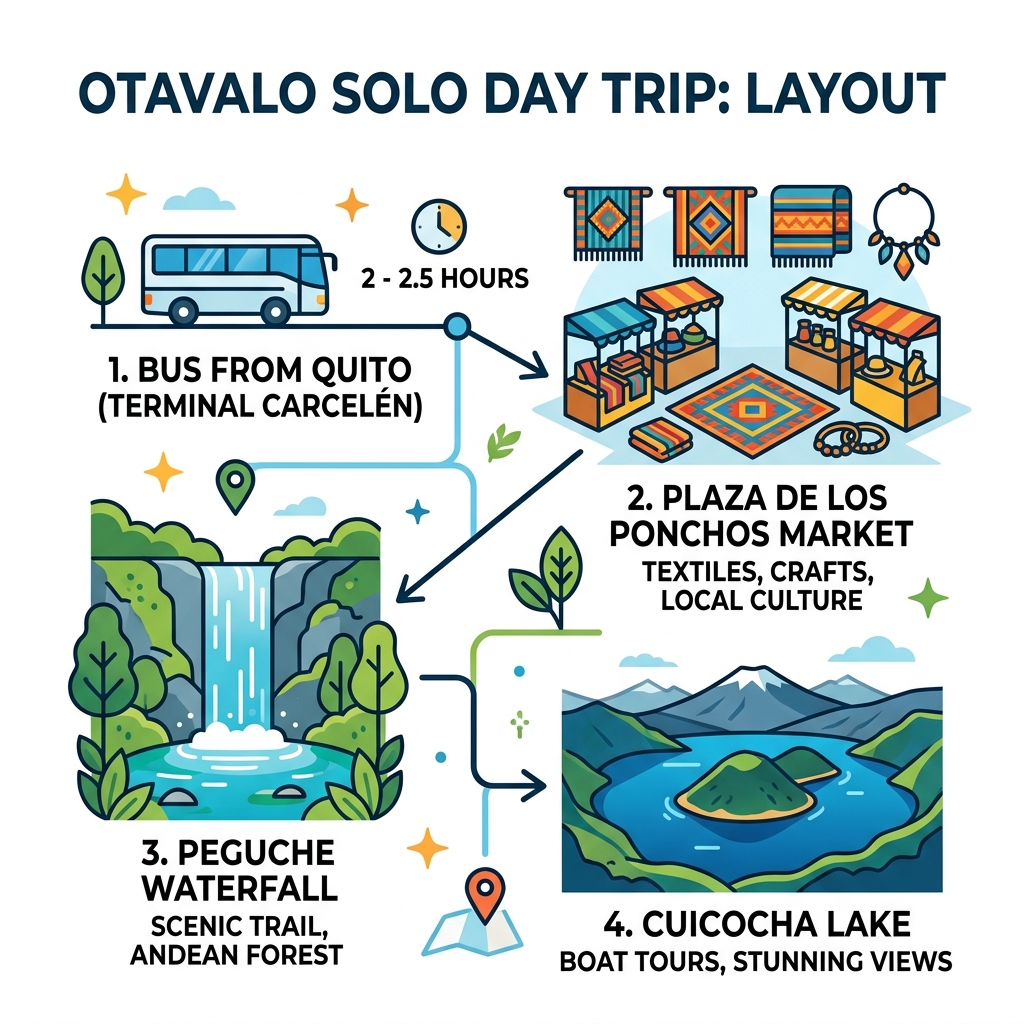
Getting there is half the adventure. For the most affordable and authentic experience, we recommend taking the public bus. You’ll need to head to Terminal Carcelén in northern Quito.
- The Bus: Look for buses labeled “Otavalo” or “Ibarra.” A one-way ticket costs roughly $3 USD. The journey takes between 2 to 2.5 hours, depending on traffic. You don’t usually need to book in advance; buses leave every 15–20 minutes.
- Private Transport: If you prefer more comfort, private tours or car rentals are available. Car rentals start around $25/day, but driving in the Andes requires confidence!
- Safety Tip: While the bus is safe, always keep your daypack on your lap, never in the overhead bin or under your seat. Petty theft can happen to distracted travelers.
For more detailed safety advice, read our guides on Staying Safe While Traveling Alone and Traveling Safely in Unknown Countries.
Best times for visiting indigenous markets otavalo solo
Timing is everything when visiting the indigenous markets otavalo solo.
- Saturday (The Main Event): This is when the market expands from the Plaza de los Ponchos to fill almost the entire town center. It is vibrant, loud, and crowded. You’ll also find the famous animal market (feria de animales) on the outskirts of town, which starts as early as 6:00 AM.
- Wednesday (The “Local” Day): Wednesday is the second-largest market day. It offers a great balance of variety without the overwhelming tourist crowds of Saturday.
- Daily: The Plaza de los Ponchos is actually open every day from 7:00 AM to 6:00 PM. If you are a solo traveler who hates crowds, visiting on a Monday or Thursday is a Hidden Gem for Solo Travelers. You’ll have more space to talk to artisans and see their work up close.
Navigating the Market: Products, Prices, and Haggling
The heart of the action is the Plaza de los Ponchos. Here, you’ll find a dizzying array of colors. From the “baby alpaca” blankets (usually a soft synthetic blend, but still incredibly cozy) to hand-carved tagua nut jewelry (often called “vegetable ivory”), the variety is immense.
As a solo traveler, you have the advantage of moving quickly or lingering as long as you like. We recommend doing a “lap” of the plaza first to get a feel for the prices before you commit to buying.
| Item | Estimated Initial Price | Fair Counter-Offer (60-70%) | Final “Good” Price |
|---|---|---|---|
| Alpaca Blend Blanket | $35.00 | $20.00 | $25.00 |
| Small Silver Earrings | $12.00 | $7.00 | $8.00 – $10.00 |
| Handwoven Poncho | $45.00 | $27.00 | $30.00 – $35.00 |
| Embroidered Blouse | $25.00 | $15.00 | $18.00 |
Shopping solo means you need to be your own accountant. Check out our Budgeting for Solo Travel: A Comprehensive Guide and Your Essential Guide to Budget-Friendly Solo Travel to keep your finances on track.
Authentic Finds and Souvenirs
While mass-produced items have crept into the market, you can still find incredible authentic treasures. Look for:
- Backstrap Loom Textiles: These are narrower than machine-made fabrics and have a distinct, slightly irregular texture that proves they were made by hand.
- Panama Hats: Fun fact — they actually originate in Ecuador, not Panama! Look for the “Montecristi” label for high quality.
- Totora Reed Mats: Traditional mats made from reeds harvested at nearby Lake San Pablo.
- Silver Jewelry: Otavalo is famous for its multi-strand gold-colored bead necklaces and intricate silver work.
The history of these traditions is deep. The Otavaleños have been master weavers since pre-Inca times, using the backstrap loom to create garments that were so prized they were used as tribute for Spanish colonizers. This legacy is part of the broader History of Andean textile traditions that continues to define the region’s identity.
Master the Art of Andean Bargaining
Haggling is expected and is considered a social interaction rather than a confrontation. Here is how to do it like a pro:
- The 60% Rule: Start your counter-offer at about 60% of their first price. You will likely meet in the middle at around 75-80%.
- Small Bills are King: Vendors often “don’t have change” for a $20 bill. Carry plenty of $1 and $5 bills.
- Smile and Walk: If the price isn’t right, a polite “No, gracias” and walking away often results in a final, lower offer.
- Kichwa Phrases: Learning a few words of Kichwa, like “Alli punlla” (Good day), goes a long way in building rapport.
For more tips on navigating these interactions, see our Mastering Solo Travel: A Beginner’s Guide.
Cultural Etiquette and Safety for Independent Explorers
When visiting the indigenous markets otavalo solo, it is vital to remember that you are a guest in a living community. The Otavaleños are proud of their heritage. You’ll notice the men often wear their hair in a single long braid (gualca) and white calf-length trousers, while women wear beautifully embroidered blouses and dark wrap skirts.
Photography Etiquette: Always ask before taking a close-up photo of a person. A simple “Puedo tomar una foto?” (Can I take a photo?) is enough. Some people may ask for a small tip ($0.50 or $1) in exchange, which is a fair way to support the local community. Avoid taking photos of children without parental consent.
Staying Secure in Crowded Spaces
Otavalo is generally safe, but like any world-class market, it attracts pickpockets.
- Backpack Placement: In the crowded aisles of the Plaza de los Ponchos, wear your backpack on your front.
- Phone Safety: Don’t keep your phone in your back pocket. If you need to check a map, step into a cafe or against a wall.
- Solo Female Travel: Otavalo is very welcoming to solo women. The local culture is family-oriented and respectful. However, we always recommend following our Solo Female Travel Safety Guide and checking our Solo Safety category for general precautions.
Practical Logistics for Solos
- Cash Economy: While some high-end shops in town take cards, the market is 100% cash. Ecuador uses the US Dollar.
- The Weather: It’s “eternal spring” here. Expect 15°C to 22°C (60°F–72°F). However, the sun is incredibly strong at this altitude. Wear Factor 50 sunscreen even if it’s cloudy!
- Altitude: If you feel a headache or shortness of breath, drink plenty of water and try some coca tea (mate de coca). Understanding high-altitude physiological adaptation is helpful when traveling to the Andes.
For more help with the “boring but important” stuff, see our First-Time Solo Travel: A Comprehensive Planning Guide.
Beyond the Stalls: Solo Day Trips from Otavalo
If you’ve finished your shopping and still have energy, the area around Otavalo is stunning.
- Peguche Waterfall: A 20-minute walk or a $2 taxi ride from town. This 18-meter waterfall is a sacred site for the Kichwa people, used for ritual baths during the Inti Raymi (Sun Festival).
- Cuicocha Crater Lake: About 30 minutes away by taxi ($10–$15 round trip). You can hike the 14km rim of this active volcano crater, which features two islands in the center. It’s a great way to experience Solo Travel in South America.
- Cotacachi: Known as the “Leather Capital” of Ecuador. It’s a short bus ride away and perfect for finding high-quality leather jackets, boots, and bags.
Nature and Workshops
For a deeper dive, visit the Museo Otavalango or local weaving workshops in the village of Agato. These spots allow you to see the process of cleaning, spinning, and dyeing wool using natural ingredients like cochineal insects and walnuts. If you’re on a budget, these activities offer great value; check our Budget Tips for more ideas.
Frequently Asked Questions about Otavalo
Is Otavalo safe for solo female travelers?
Yes, it is considered one of the safest towns in the Ecuadorian highlands. The community is tight-knit and tourism is a major part of the local economy, so locals are generally very helpful. Just use common sense and avoid walking alone on unlit outskirts late at night.
What should I pack for the Otavalo weather?
Layers are your best friend. A t-shirt for the midday sun, a light fleece for the shade, and a waterproof rain jacket for the afternoon Andean showers. Comfortable walking shoes are a must for the cobblestone streets.
Can I visit the animal market as a solo traveler?
Absolutely. The animal market (located near the Pan-American highway) is fascinating but gritty. It starts very early (6:00 AM) on Saturdays. Expect to see cows, pigs, guinea pigs (cuy), and chickens. It’s an intense sensory experience and very “real,” so be prepared!
Conclusion
At PrimeFinHub, we believe that the best travel experiences happen when you step away from the tour bus and engage directly with the world. Visiting the indigenous markets otavalo solo offers exactly that — a chance to navigate one of South America’s most historic trade hubs at your own pace.
Whether you’re hunting for the perfect alpaca blanket or simply want to soak in the Kichwa culture, Otavalo is a destination that rewards the independent spirit. Pack your bags, brush up on your Spanish, and get ready for an unforgettable Andean adventure.
Ready for more? Explore our other Destinations or dive deeper into Solo Travel in South America.
