
Greece Is a Living Museum — Here’s How to Experience It Right
Authentic cultural tours Greece travelers seek offer something fundamentally different from standard sightseeing: real immersion into the country’s ancient history, living traditions, and local communities.
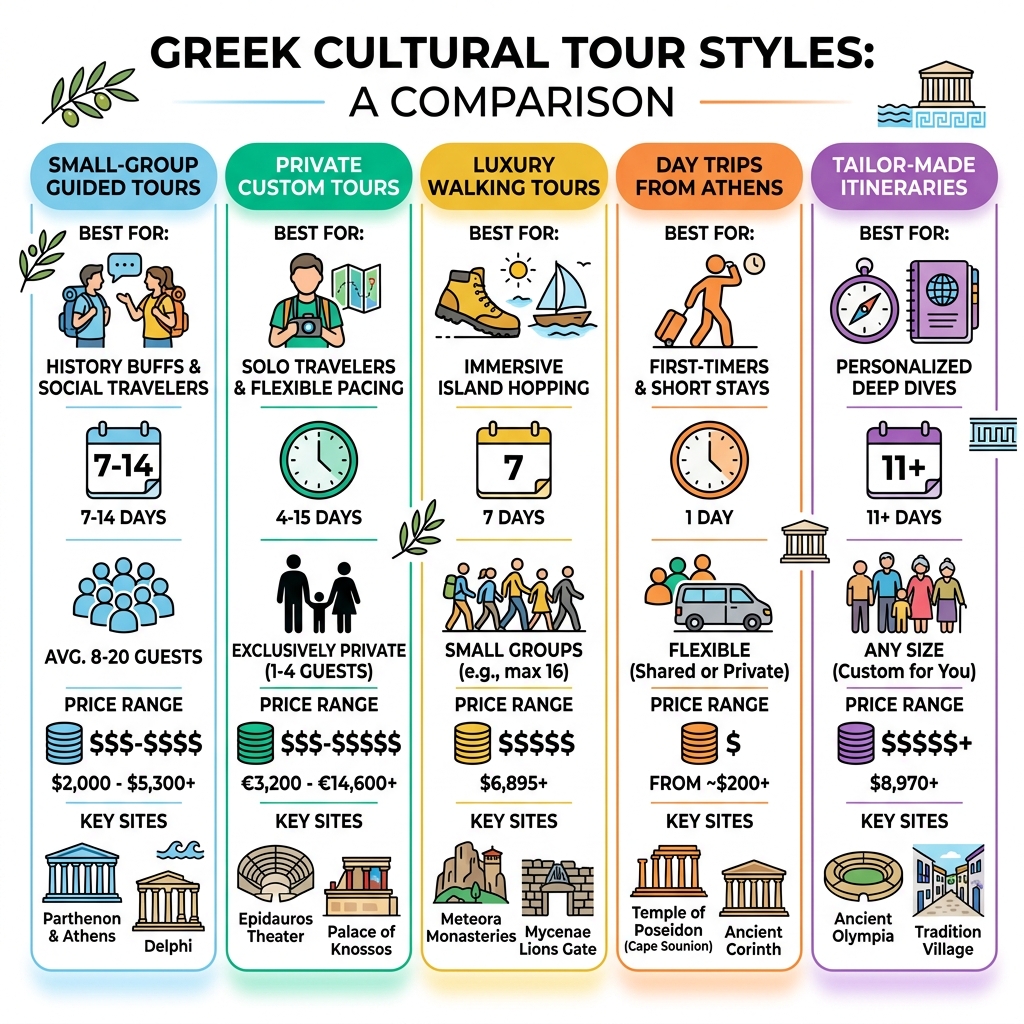
If you want a quick answer, here are the top options worth comparing:
| Tour Style | Best For | Typical Duration | Price Range |
|---|---|---|---|
| Small-group guided tours | History buffs, social travelers | 7–14 days | $2,000–$5,300+ |
| Private custom tours | Solo travelers, flexible pacing | 4–15 days | €3,200–€14,600+ |
| Luxury walking tours | Immersive island hopping | 7 days | $6,895+ |
| Day trips from Athens | First-timers, short stays | 1 day | From ~$200+ |
| Tailor-made itineraries | Personalized deep dives | 11+ days | $8,970+ |
Greece isn’t just a destination — it’s a place where every region tells a layered story. Mycenae predates the Parthenon by 1,000 years. Delphi was once considered the literal center of the world. Meteora’s monasteries began as hermit dwellings in the 11th century.
That kind of depth rewards slow, intentional travel — not rushed bus tours.
This guide breaks down the best authentic cultural tour options in Greece so you can compare them clearly and find the right fit for your style, budget, and pace.
Defining Authenticity in Greek Cultural Travel
When we talk about authentic cultural tours greece, we aren’t just talking about seeing the Parthenon and taking a photo. Authenticity is the difference between looking at a monument and understanding the heartbeat of the people who built it—and those who live in its shadow today.
Standard sightseeing trips often prioritize “ticking boxes.” You arrive at a site, listen to a few dates, take a selfie, and hop back on a bus with 50 other people. In contrast, an authentic immersion experience focuses on storytelling. It’s about having an expert-led insight—often from archaeologists or historians—who can explain why the acoustics in an ancient theater work or how a specific myth influenced modern Greek law.
Unhurried pacing is another hallmark of authenticity. Instead of rushing through three cities in two days, high-quality tours allow for “vacations from the vacation.” This might mean a free afternoon to wander a car-free island like Hydra or a slow morning sipping coffee in a village square. These moments allow for genuine community-based encounters, where you might chat with a local baker or watch a weaver at work in a Byzantine monastery.
Finally, religious significance plays a massive role in Greek culture. Authenticity means visiting active monasteries in Meteora or hidden chapels in Athens not just as a tourist, but as a witness to centuries-old spiritual practices that continue to shape the Greek identity.
Essential Sites for Authentic Cultural Tours in Greece
To truly experience the “Living Museum” that is Greece, certain landmarks are non-negotiable. However, the way you visit them matters.
- The Acropolis of Athens: The crown jewel of Greek heritage. An authentic tour often visits early in the morning to avoid crowds, focusing on the architectural evolution of the Parthenon and the storytelling found within the nearby Acropolis Museum.
- The Delphi Oracle: Once the spiritual center of the Greek world, Delphi sits on the slopes of Mount Parnassus. It is a place where mortals once came to converse with gods, and the site includes a stadium, theater, and the famous Temple of Apollo. For background before you go, the UNESCO World Heritage page for Delphi offers a useful overview of its historical significance.
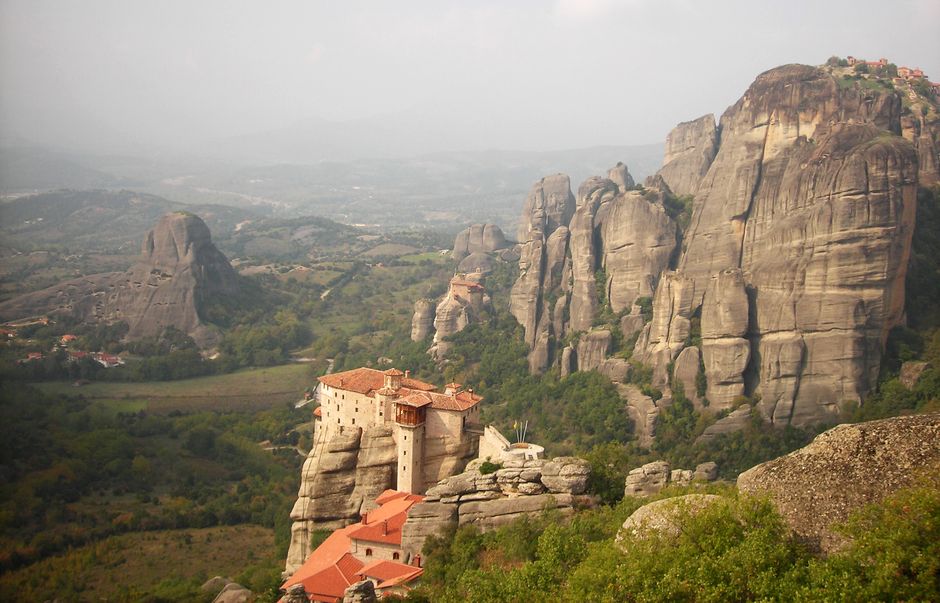
- Meteora: This is a landscape like no other. Giant rock pillars are topped by medieval monasteries. A deep-dive tour explores the history of the 11th-century hermits who first sought solitude here.
- Epidaurus: Famous for its 14,000-seat theater, the acoustics here are so perfect that a coin dropped on the stage can be heard in the back row.
- Olympia: Walking the original track where the first Olympic Games were held over 2,700 years ago is a “wow” moment for any history enthusiast.
Comparison of Regional Cultural Hubs
| Region | Key Cultural Focus | Must-Visit Site | Best Experience |
|---|---|---|---|
| Athens | Classical Antiquity | The Parthenon | Early morning guided walk |
| Peloponnese | Myths & Legends | Mycenae | Olive oil tasting at a local mill |
| Central Greece | Spirituality & Oracles | Delphi | Exploring the Temple of Apollo |
| The North | Byzantine & Ottoman | Meteora | Visiting cliffside monasteries |
| The Islands | Maritime & Village Life | Delos/Hydra | Walking car-free stone alleys |
Immersive Experiences in the Peloponnese
The Peloponnese is a mythic land of cypress trees, emerald waters, and ancient ruins. For those seeking authentic cultural tours greece, this region offers a dense concentration of history.
You can explore the ruins of Mycenae, founded by Perseus 1,000 years before the Parthenon was even a thought. In the old town of Nafplio, the first capital of modern Greece, the culture is felt through folk music evenings and strolls through Venetian-style streets.
For a “Wild West” vibe, the Mani Peninsula features unique tower houses born from historical clan wars. Nearby, the Byzantine ruins of Mystras offer a hauntingly beautiful look at a once-great empire. Immersion here is not just visual; it is tactile. Many tours include traditional pottery workshops or olive oil tastings where you learn the grading process of “liquid gold” directly from the producers.
Northern Wonders and Religious Landmarks
Heading north reveals a different side of Greek culture. The Zagorochoria stone villages are tucked away in the Pindus Mountains. Known as places “where stone gives birth to stone,” these 46 villages feature incredible arched bridges and slate-roofed houses.
In Ioannina, the history is a blend of Byzantine and Ottoman influences, centered around a stunning lake. For a truly unique experience, some itineraries include multi-day explorations of Meteora, Delphi, and authentic Greek villages, which balance famous UNESCO sites with the quiet, unpretentious life of the Greek countryside.
The Benefits of Small-Group and Private Itineraries
One of the most consistent findings in our research is that group size directly impacts cultural immersion. Larger tours (40+ people) often struggle to access the “real” Greece.
Small-group tours (typically 24–28 people) and private tours offer:
- Personalized Service: Guides can answer specific questions and adapt the pace to the group’s energy.
- Exclusive Access: Small groups can visit boutique family-owned wineries or tiny mountain bakeries where a large bus simply couldn’t park.
- Boutique Accommodations: Instead of chain hotels, these tours often utilize historic guesthouses or restored mansions that reflect regional character.
- Regenerative Travel: Smaller footprints help sustain local ways of life without overwhelming the community.
For those traveling alone, these smaller formats provide a perfect balance of independence and social connection. If you are looking for inspiration on where to start your journey, check out our guide on cultural-travel-destinations-for-solo-travelers-2 or explore where-to-go-when-youre-flying-solo-and-craving-culture for more curated spots.
Tailoring Authentic Cultural Tours in Greece for Solo Travelers
At PrimeFinHub, we specialize in curating destinations for the independent explorer. Solo travelers often worry about safety or feeling “out of place” on a tour. However, the right cultural tour acts as a bridge.
By choosing a well-organized small-group tour, soloists can benefit from a structured itinerary while enjoying the freedom of “vacation from the vacation” days. These tours often attract like-minded learners, making it easy to find a dinner companion or a hiking partner for a trek up the Acropolis.
Safety is high in Greece—it is considered one of Europe’s safest countries—but having a local expert handle the logistics of private transfers and ferry schedules allows solo travelers to focus entirely on the experience. For more tips, see our dedicated resource on cultural-travel-destinations-for-solo-travelers.
Practical Preparation and Frequently Asked Questions
Physical Demands and Preparation
Traveling through Greece’s history is a workout. Many of the most authentic sites—like the hilltop ruins of Monemvasia or the 200+ stairs leading to the Parthenon—require significant physical effort.
- Walking Endurance: Expect to walk between 2 and 8 miles daily.
- Terrain: You will encounter uneven cobblestones, steep hills, and marble stairs that can be slippery when dry and treacherous when wet.
- Luggage: On many authentic tours, you may need to carry your own bags over pavement or up hotel stairs.
Seasonal Timing
Spring (April to June) and Autumn (September to October) are the “sweet spots.” The weather is mild enough for long walks, and the crowds at major UNESCO sites are manageable. Summer offers the best beach weather but can be hot for archaeological exploration, with temperatures often exceeding 95°F (35°C).
Packing Essentials
- Shoes: Sturdy, broken-in walking shoes with good grip are mandatory.
- Clothing: Think layers. Even in summer, monasteries require modest dress (shoulders and knees covered), and mountain evenings can be cool.
- Sun Protection: A wide-brimmed hat and high-SPF sunscreen are essential, as many ancient sites offer very little shade.
What defines authentic cultural tours in Greece?
An authentic tour is defined by its depth and connection. It moves beyond the “what” (the monument) to the “why” (the cultural and historical context). Key indicators include small group sizes, the use of expert local guides (archaeologists/historians), and the inclusion of hands-on experiences like cooking classes with locals or visits to working monasteries.
How physically demanding are the archaeological sites?
They are moderately to highly demanding. Greece is mountainous, and its history is often built on high ground for defense. You should be comfortable walking several miles a day on uneven surfaces and climbing multiple flights of stairs.
What unique local experiences can travelers expect?
Beyond the ruins, you can expect:
- Culinary Immersion: Making hand-made phyllo dough with a master baker or learning to make traditional cheese.
- Local Traditions: Dancing to live folk music in a village square or attending a local religious ceremony.
- Insider Access: Meeting local artisans, such as weavers in a Byzantine monastery or third-generation olive oil producers.
Conclusion
A Greek Odyssey is more than a vacation; it is a journey through the foundations of Western civilization. Whether you are running on the original Olympic field or sharing a meal with a local family in the Mani Peninsula, the most memorable moments come from the connections you make with the land and its people.
At PrimeFinHub, we believe that travel should be regenerative, immersive, and tailored to the curious spirit of the independent explorer. By choosing authentic cultural tours greece that prioritize slow pacing and expert storytelling, you ensure that your trip leaves you with a deeper understanding of the world.
Ready to start your own adventure? Explore more destinations and find the perfect cultural spot for your next solo journey.
