
The Best Cultural Hikes for Solos, at a Glance
Cultural hikes for solos are one of the most rewarding ways to travel independently — and you don’t need a group to make them work.
Here are the top cultural hiking destinations for solo explorers:
- Kumano Kodo, Japan – Ancient UNESCO pilgrimage trail with shrines, onsen, and spiritual forests
- Nakasendo Trail, Japan – 540km samurai route through preserved Edo-period post towns
- Sacred Valley & Santa Cruz Trek, Peru – High-altitude Andean trails steeped in Inca history
- Tour du Mont Blanc, Europe – 103-mile Alpine circuit through France, Italy, and Switzerland
- South West Coast Path, England – Coastal trail crowned the world’s happiest walk
- Amalfi Coast, Italy – Clifftop paths above the Mediterranean with rich cultural villages
Going solo doesn’t mean going without. In fact, it often means going deeper.
Solo travel forces you to slow down, pay attention, and actually connect — with locals, with history, and with yourself. Many hikers report that their most transformative travel moments happened not on a group tour, but alone on a trail somewhere ancient and quiet.
The trails in this guide aren’t just scenic. They pass through living history — samurai roads, pilgrimage routes walked by emperors, Inca pathways, and medieval European tracks. Each one offers something rare: a chance to move through a culture at a human pace, on foot, with no fixed agenda but your own.
Whether you have three days or three weeks, there’s a cultural hike here that fits your timeline, fitness level, and appetite for adventure.
Why Cultural Hikes for Solos are the Ultimate Growth Experience
Choosing to embark on cultural hikes for solos is about more than just checking a destination off a bucket list; it is a profound exercise in self-reliance and mindfulness. When we strip away the distractions of a group, we open ourselves up to the rhythm of the trail and the nuances of the local culture.
Safety is often the primary concern for those venturing out alone. Fortunately, data from the Global Peace Index consistently ranks countries like Japan (frequently in the top 10) and New Zealand (ranked #4) as some of the safest places on Earth. These high safety rankings provide a “social safety net” that allows us to focus on the experience rather than our anxiety.
The growth comes from the spontaneity that solo travel affords. If you want to spend an extra hour meditating at a Shinto shrine or chatting with a goat herder in the Alps, you can. There are no group consensus meetings. This freedom fosters a deep sense of self-efficacy—the belief that you can handle whatever the trail throws at you.
| Consideration | Benefit for Solo Hikers |
|---|---|
| Spontaneity | Change your pace or route without needing group approval. |
| Mindfulness | Deeper connection to nature and historical surroundings. |
| Social Interaction | Solos are more likely to be approached by locals and other hikers. |
| Spiritual Healing | Solitude allows for reflection and emotional processing. |
| Skill Building | Navigating and planning solo builds lasting confidence. |
Top Destinations for Cultural Hikes for Solos
When we look for the perfect cultural hike, we look for a blend of historical depth, reliable infrastructure, and local hospitality. The following destinations represent the “gold standard” for independent exploration.
Japan’s Kumano Kodo: The Gold Standard for Cultural Hikes for Solos
The Kumano Kodo is not just a trail; it is a 1,000-year-old spiritual heartland. As one of only two pilgrimage routes in the world with UNESCO World Heritage status, it offers an unparalleled mix of physical challenge and spiritual depth.
The most popular route for solos is the Nakahechi, or the “Imperial Route.” Historically, this path was walked by emperors and aristocrats. Today, it is remarkably accessible for independent travelers. One of the most beautiful aspects of this trail is its history of inclusivity. Unlike many sacred sites in Japan that were once forbidden to women, the Kumano Kodo was promoted as a path for everyone, regardless of gender or status.
You can read more about why this is the Japan’s Kumano Kodo Trail: The Perfect Hike for Solo Women – AFAR .
Key Highlights:
- Nachi Falls: Standing at 133 meters, it is the tallest waterfall in Japan and a site of ancient nature worship.
- Onsen Purification: After a day of trekking, you can soak in the medicinal waters of Yunomine Onsen, where pilgrims have performed purification rites for 1,800 years.
- Jizo Statues: Small stone statues dot the trail, believed to protect travelers and grieving mothers.
- Dual Pilgrim Status: If you complete both the Kumano Kodo and the Camino de Santiago, you can register as a “Dual Pilgrim.”
The Nakasendo Way: Walking with Samurais
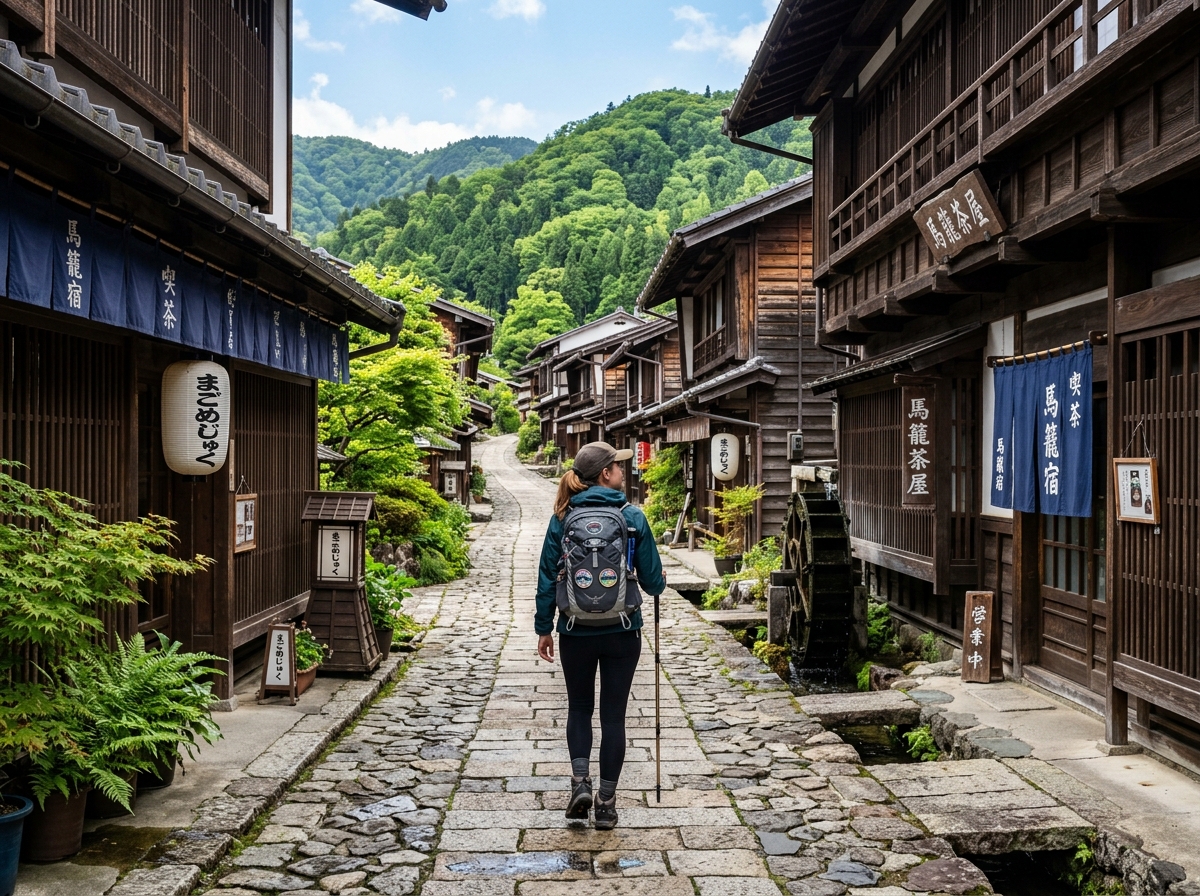
If the Kumano Kodo is about the spirit, the Nakasendo Way is about history and society. This 540km route connected Kyoto and Tokyo during the Edo period (1603–1868). While the full trail is long, the 85km stretch known as the Kiso Road is the crown jewel for cultural hikers.
The trail passes through “post towns”—rest stops for ancient travelers, including samurais and daimyos. Towns like Magome and Tsumago have been meticulously preserved, with no power lines or modern cars allowed on the main thoroughfares.
For the solo hiker, the Nakasendo is incredibly “civilized.” You can use luggage forwarding services (takuhaibin) to send your bags ahead to your next guesthouse for about ¥1,000, allowing you to hike with only a light daypack. Just remember to carry a “bear bell”—available for rent at local tourist offices—to alert local wildlife of your presence!
Peru’s Sacred Valley: Beyond the Inca Trail
Peru is often synonymous with the Inca Trail, but for those seeking cultural hikes for solos, the Sacred Valley offers much more. While the classic Inca Trail requires a licensed guide and permits booked months in advance, other routes like the Santa Cruz Trek near Huaraz offer a more rugged, independent feel.
Cusco remains the heart of the experience. As one of the oldest continually inhabited cities in the Western Hemisphere, it serves as the perfect base. For solo travelers, joining a guided group for the 4-day Inca Trail is actually a great way to meet people. The limited daily permits (500 per day, including porters) create a tight-knit group dynamic.
If you prefer true solitude, the high-altitude trails around the Cordillera Blanca provide breathtaking views of Andean peaks and a chance to interact with Quechua-speaking communities who have lived in these mountains for centuries.
Europe’s Historic Paths: From the Alps to the Amalfi Coast
Europe is a playground for the solo cultural hiker because of its extensive hut system and well-marked trails.
- Tour du Mont Blanc (TMB): This 103-mile circular route through France, Italy, and Switzerland is one of Europe’s most popular. Because you stay in mountain huts (refugios), you meet hikers from all over the world every night, making it impossible to feel lonely.
- South West Coast Path, England: Recently crowned the “happiest walk worldwide” in a survey, this path offers 630 miles of coastal beauty and quaint English village culture.
- Amalfi Coast, Italy: The “Walk of the Gods” (Sentiero degli Dei) lives up to its name. It connects mountaintop villages with views of the turquoise Mediterranean, ending in towns where you can reward yourself with world-class pasta and local limoncello.
Essential Logistics and Safety for Independent Trekkers
Planning cultural hikes for solos requires a bit more legwork than a standard vacation, but the payoff is worth it.
Safety First
We always recommend checking the Global Peace Index and your local State Department travel ratings before booking. While the destinations we’ve listed are generally safe, basic precautions apply:
- Share your itinerary: Always let someone know your daily start and end points.
- Download offline maps: While trails like the Nakasendo are well-marked, GPS apps like AllTrails or Gaia GPS are lifesavers when clouds roll in.
- Learn basic phrases: Knowing how to ask for water, a bathroom, or help in the local language goes a long way.
Must-Have Gear
- Broken-in Boots: Never start a multi-day cultural hike in brand-new shoes.
- Rain Gear: Even in the “dry” season, mountain weather is unpredictable.
- Power Bank: Your phone is your map, your camera, and your emergency line.
- Cash: Many remote tea houses and guesthouses in Japan and Peru do not take credit cards.
Practical Itineraries for Cultural Hikes for Solos
Whether you have a half-day or a week, these sample plans can help you get started:
1. The Kyoto Day Trip (Kurama to Kibune): This is a perfect “starter” hike. It’s a 5km, 3-hour walk through the holy mountains of northern Kyoto. You’ll see giant cedar trees, the Kurama-dera Temple (founded in 770 AD), and finish in the village of Kibune, where you can eat on platforms over the river.
2. The 3-Day Nakasendo Plan:
- Day 1: Train from Nagoya to Nakatsugawa; hike from Ochiai to Magome (5km). Stay in a traditional minshuku.
- Day 2: Hike Magome to Tsumago (8km) through the most scenic part of the Kiso Road.
- Day 3: Explore Tsumago’s castle ruins and hike to Nagiso Station (3.5km) for your train out.
3. The 4-Day Kumano Kodo (Nakahechi):
- Day 1: Takijiri-oji to Chikatsuyu.
- Day 2: Chikatsuyu to Yunomine Onsen (the “body-breaking” slope).
- Day 3: Visit the Kumano Hongu Taisha shrine and the giant Torii gate at Oyunohara.
- Day 4: Take a bus or hike to Nachi Taisha to see the famous waterfall.
For more detailed assistance in organizing these trips, you can explore More info about travel planning services.
Authentic Flavors and Accommodations on the Trail
One of the best parts of cultural hikes for solos is the “après-hike” experience. In Japan, this means staying in minshuku (family-run guesthouses) or ryokans. You’ll sleep on futons on tatami mats and enjoy kaiseki meals—multi-course dinners featuring local specialties like mountain vegetables, river fish, and miso-marinated meats.
In the Alps, you’ll stay in refugios, where communal dining is the norm. It’s a fantastic way for solo hikers to find companionship. You might start dinner as a stranger and end it with three new friends from three different continents.
Dining Tips for Solos:
- Vegetarians: In Japan, request “shojin ryori” (Buddhist vegetarian cuisine) in advance, as many rural spots rely heavily on fish stock.
- Local Specialties: Don’t miss the “Gohei-mochi” (skewered rice cakes with walnut miso) on the Nakasendo Trail.
- Hydration: In Peru, drink “mate de coca” to help with altitude acclimation.
Frequently Asked Questions about Cultural Hikes for Solos
Is solo hiking safe for women in non-Western countries?
Yes, particularly in countries like Japan, which is consistently ranked as one of the safest destinations for solo female travelers. The Kumano Kodo, for example, has a long history of being a “female-friendly” pilgrimage. Always do your research, stay on marked trails, and trust your intuition.
How do I handle permits and logistics for independent cultural hikes?
For popular trails like the Inca Trail, you must book through a licensed agency months in advance. For trails like the Kumano Kodo, use local booking hubs like the Tanabe City Kumano Tourism Bureau. They can help arrange accommodations and luggage transfers, which are the trickiest parts of the logistics.
What fitness level is required for famous pilgrimage trails?
It varies. The Kurama to Kibune hike is easy and suitable for anyone who can walk 5km. The Kumano Kodo and the Santa Cruz Trek are much more demanding, involving steep elevation gains and high altitudes. We recommend a solid base of cardio fitness and at least a few months of “training hikes” with a weighted pack before attempting multi-day treks.
Conclusion
At PrimeFinHub, we believe that travel should be more than just a change of scenery—it should be a change of perspective. Cultural hikes for solos offer the perfect environment for this transformation. By stepping onto these ancient paths alone, you aren’t just a tourist; you are a pilgrim in your own life, following in the footsteps of samurais, monks, and explorers.
The independence you gain on the trail stays with you long after you’ve returned home. Whether it’s the mist-covered forests of Japan or the sun-drenched cliffs of Italy, your next great adventure is just one step away.
Sign up for our newsletter to start your journey and let us help you find the perfect immersive cultural spot for your next independent exploration.
